
Print shops and mailing houses
Imposition, inserter marks, spool splitting, spot colours and PDF/X-4.
KBStudio is where you design invoices, statements, policies, payslips, labels and catalogues, and where they get produced. Point it at your data and it writes the PDFs, e-mails and print files, thousands at a time. It can run on a schedule, wait for someone's approval and deliver the results on its own. PDFs from other systems go through it too: read, split, edited, redacted and archived.
Every licence includes the starter bundle: 22 finished projects with 90 workflows you can open and run on day one.
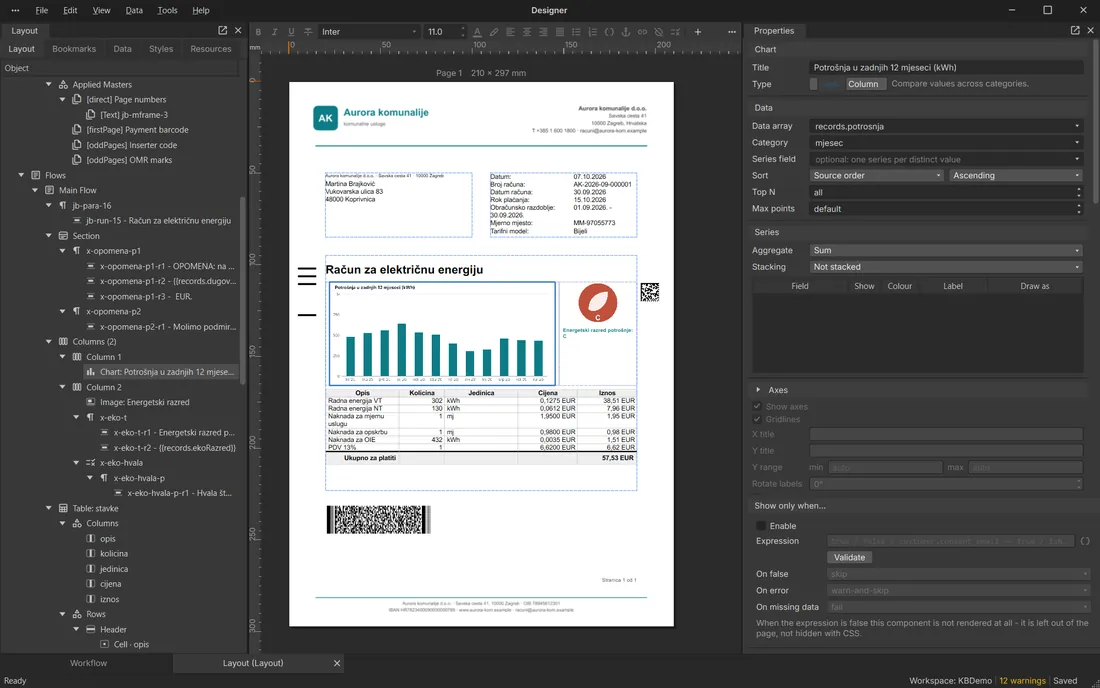
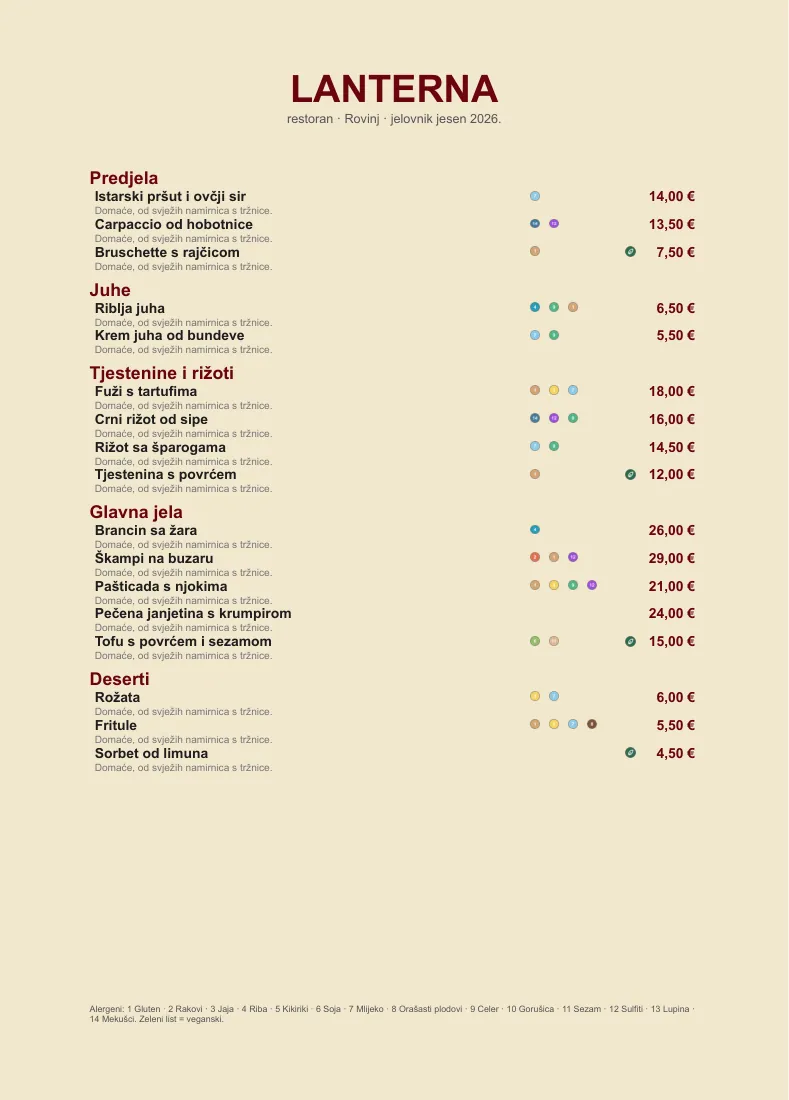
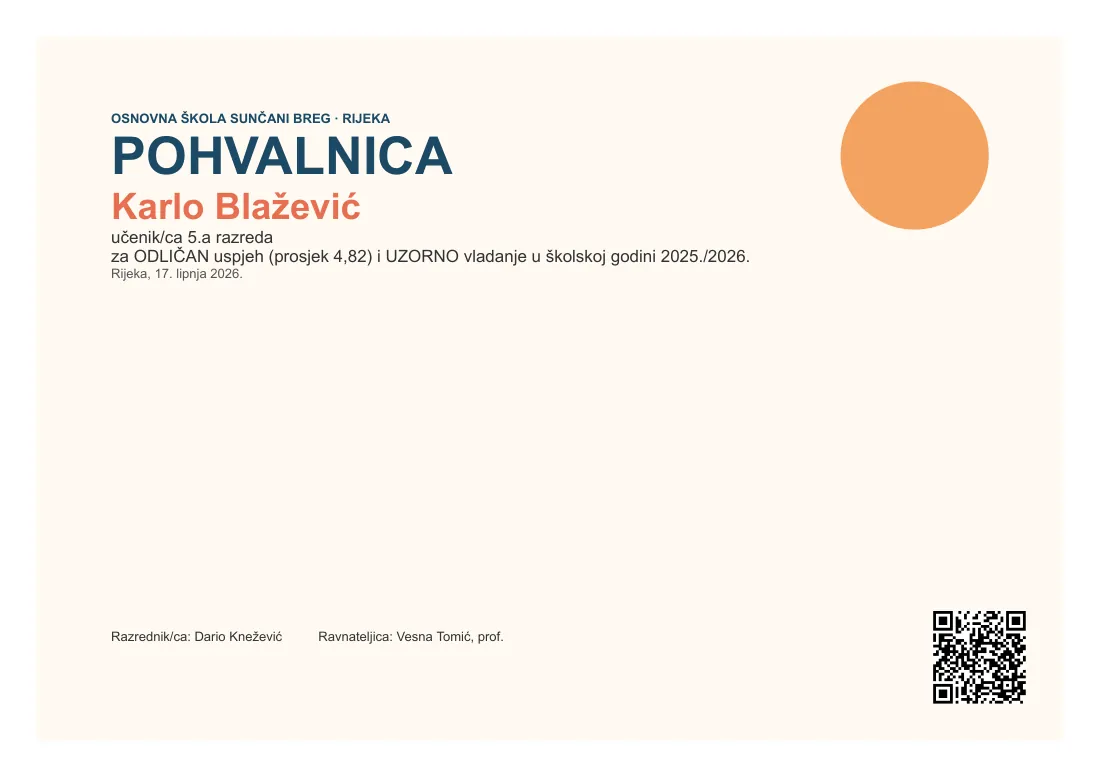
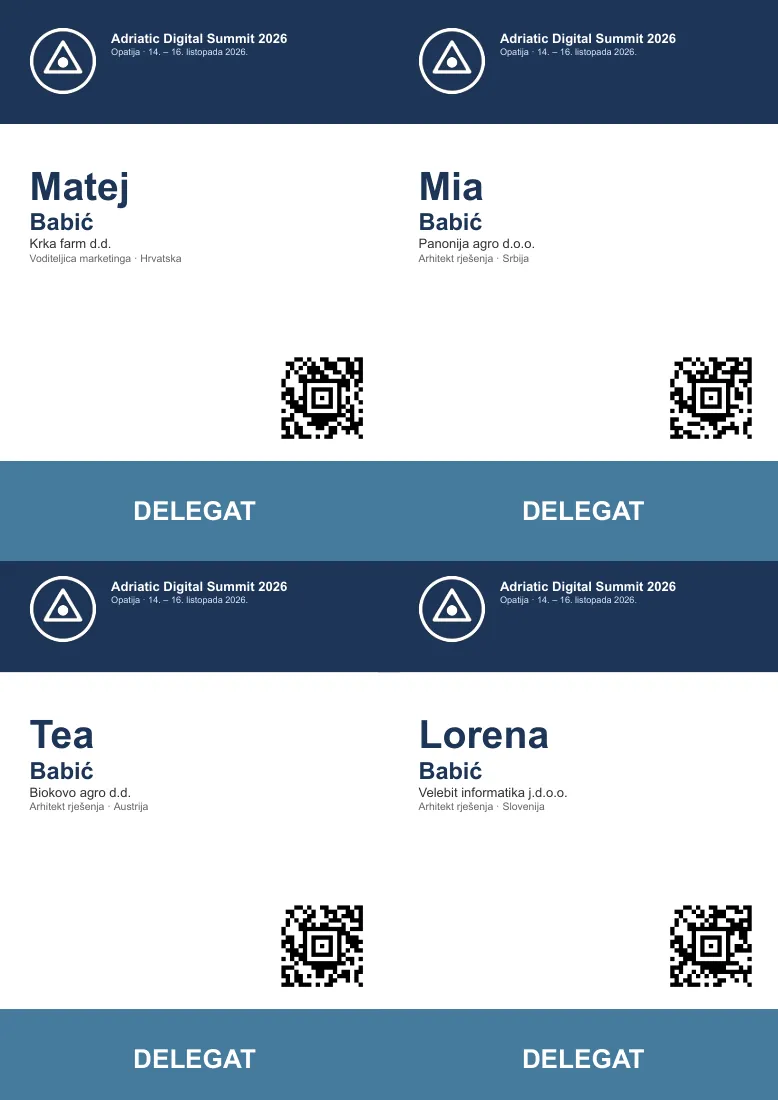
Made in KBStudio. Every page below came out of the starter bundle.
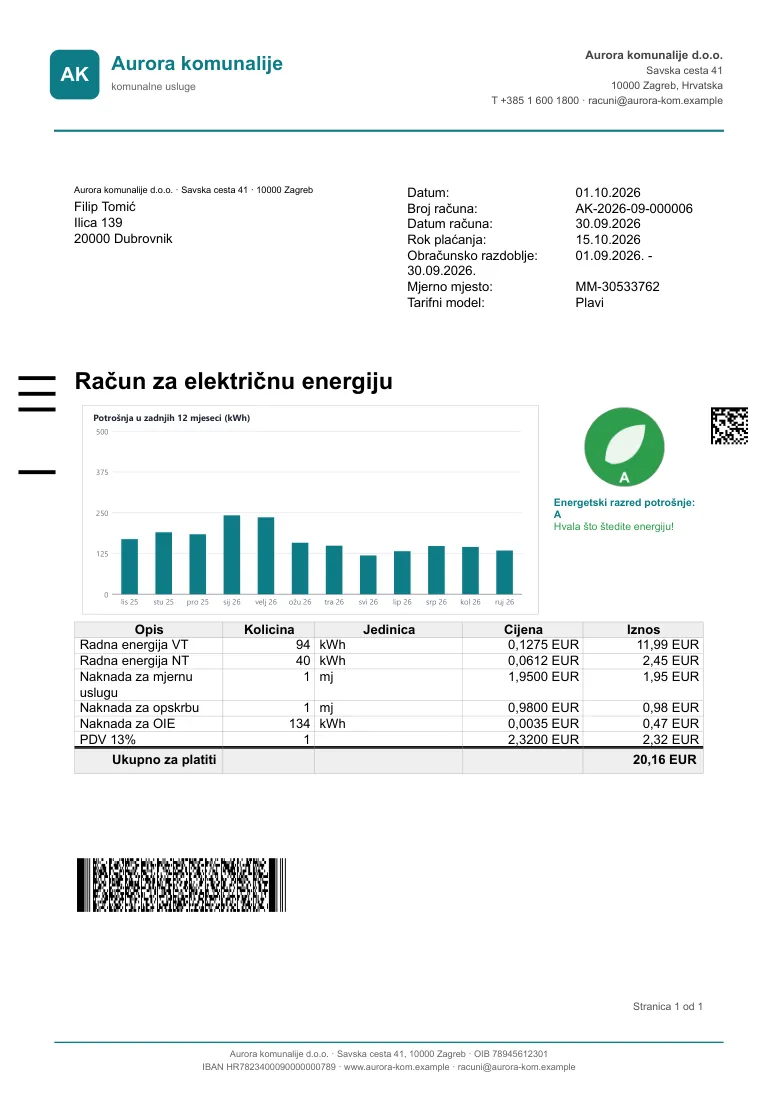
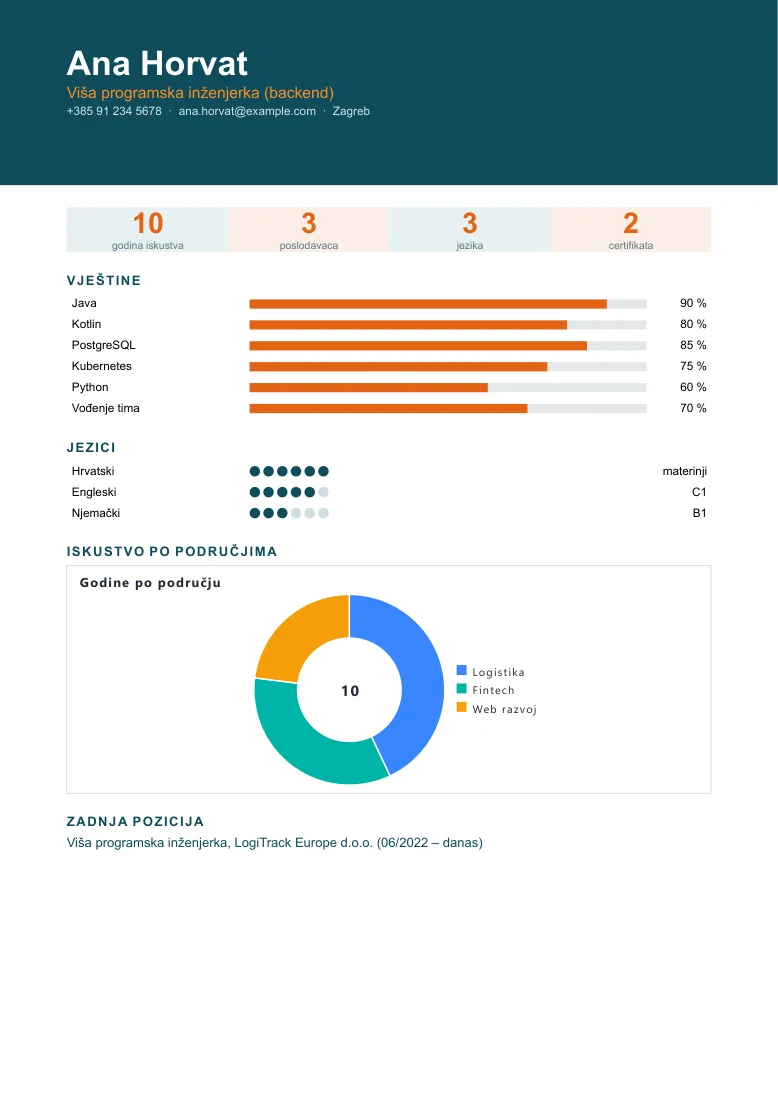
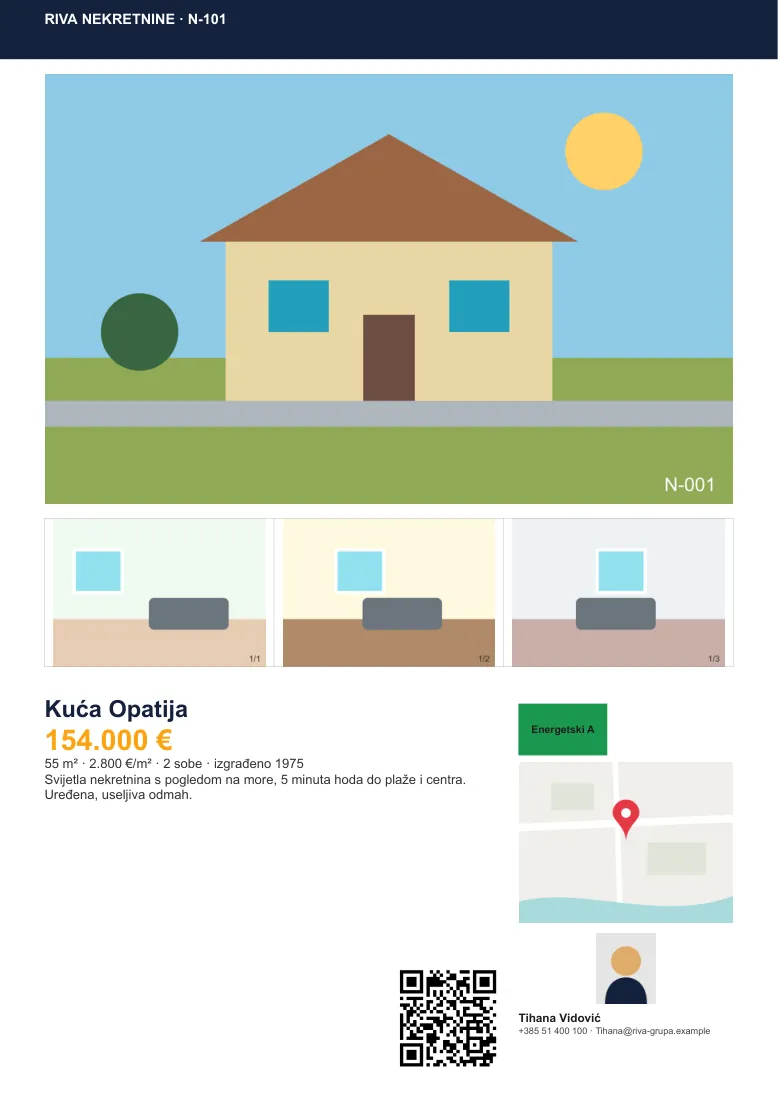
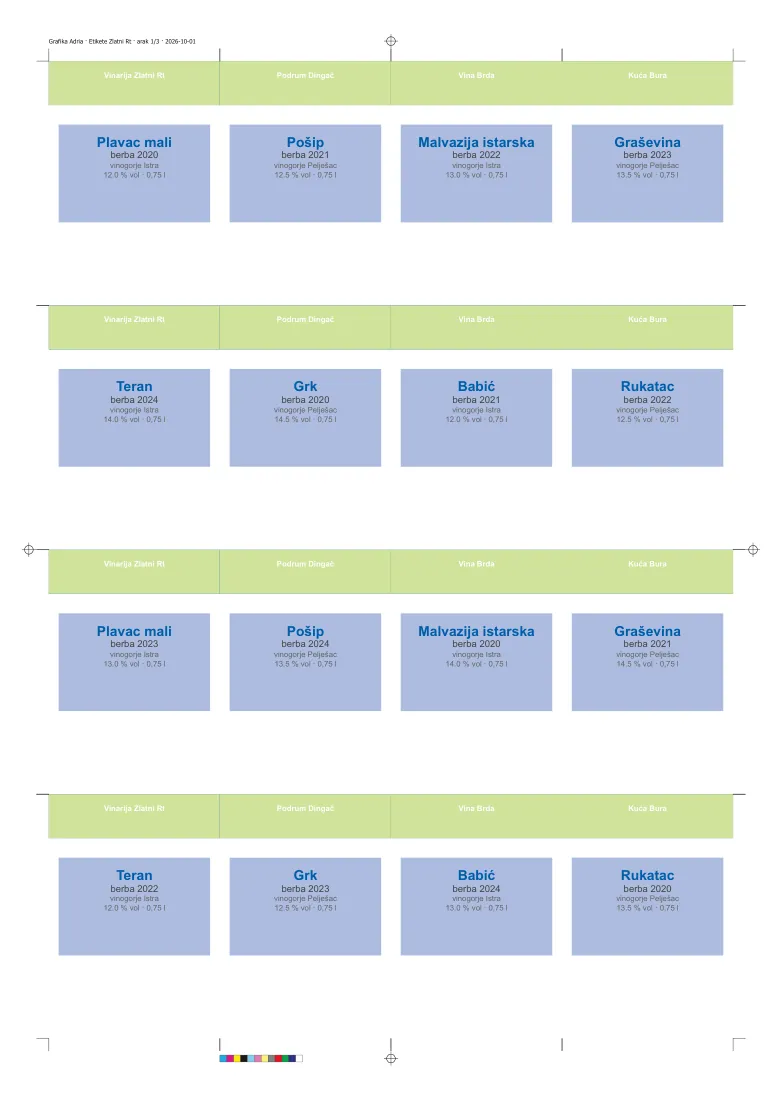
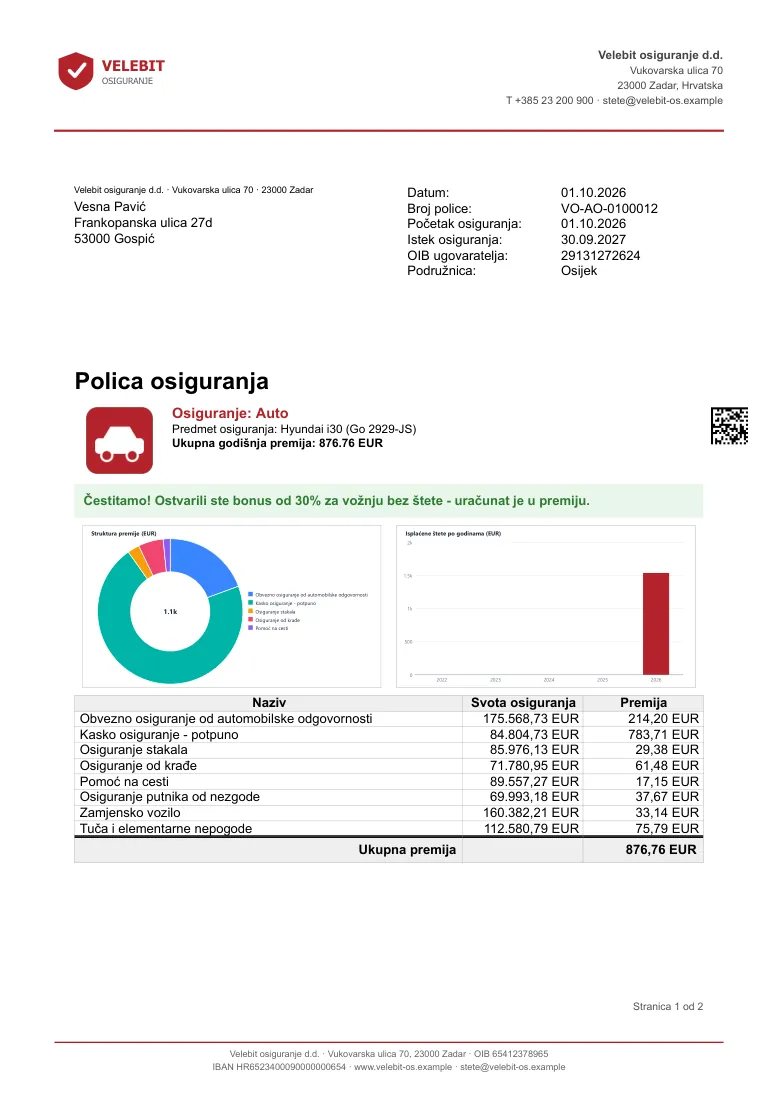
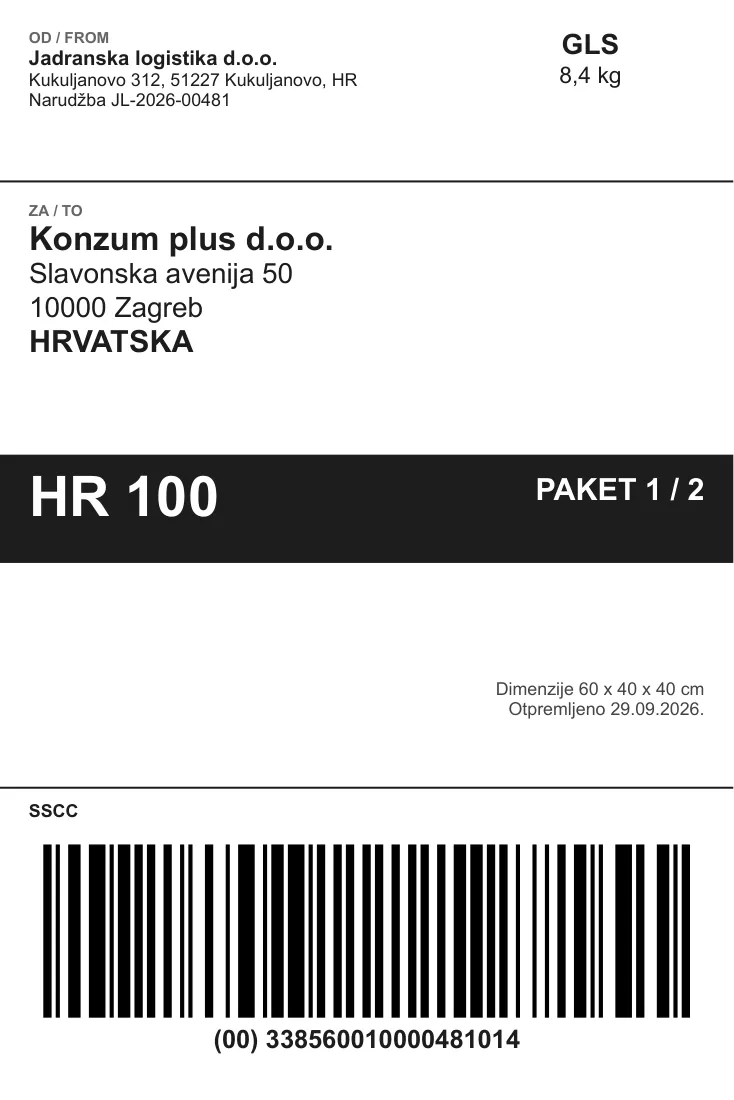

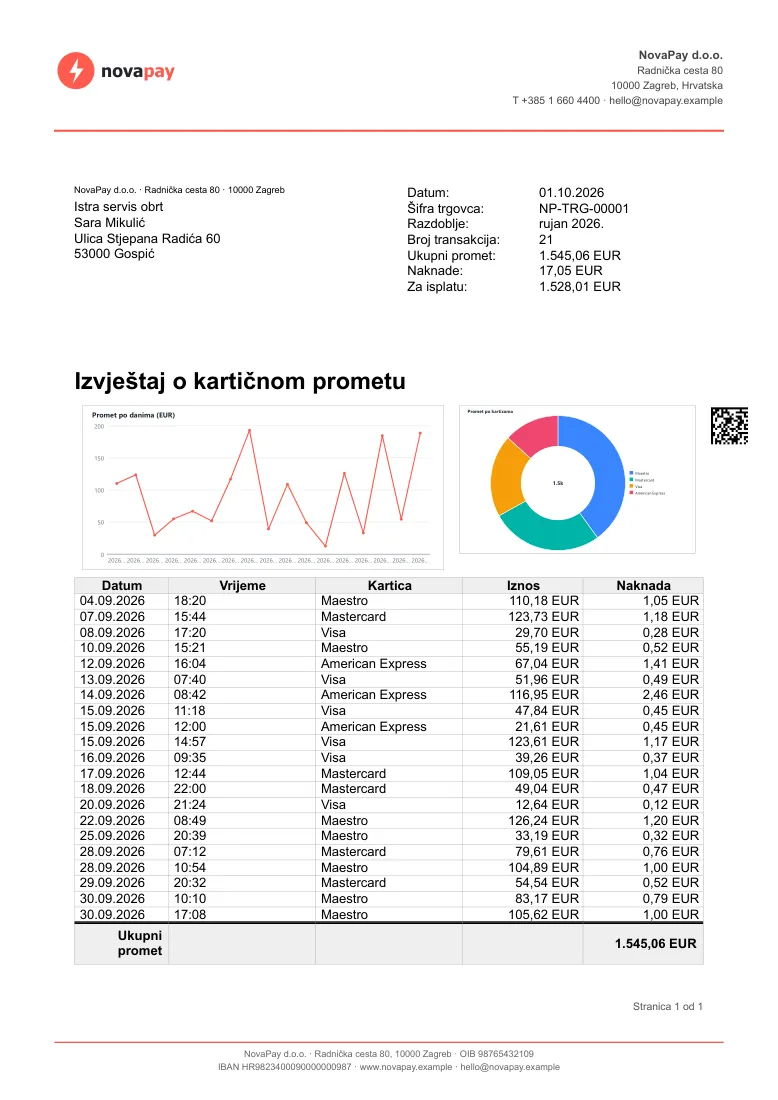
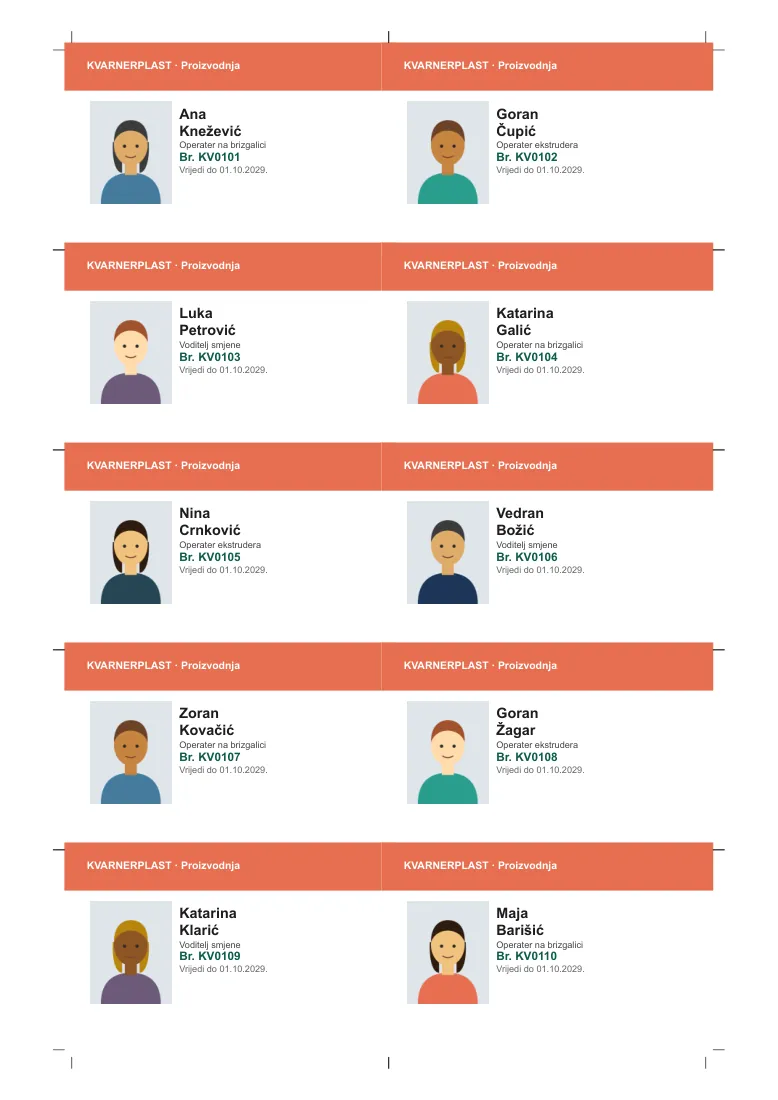
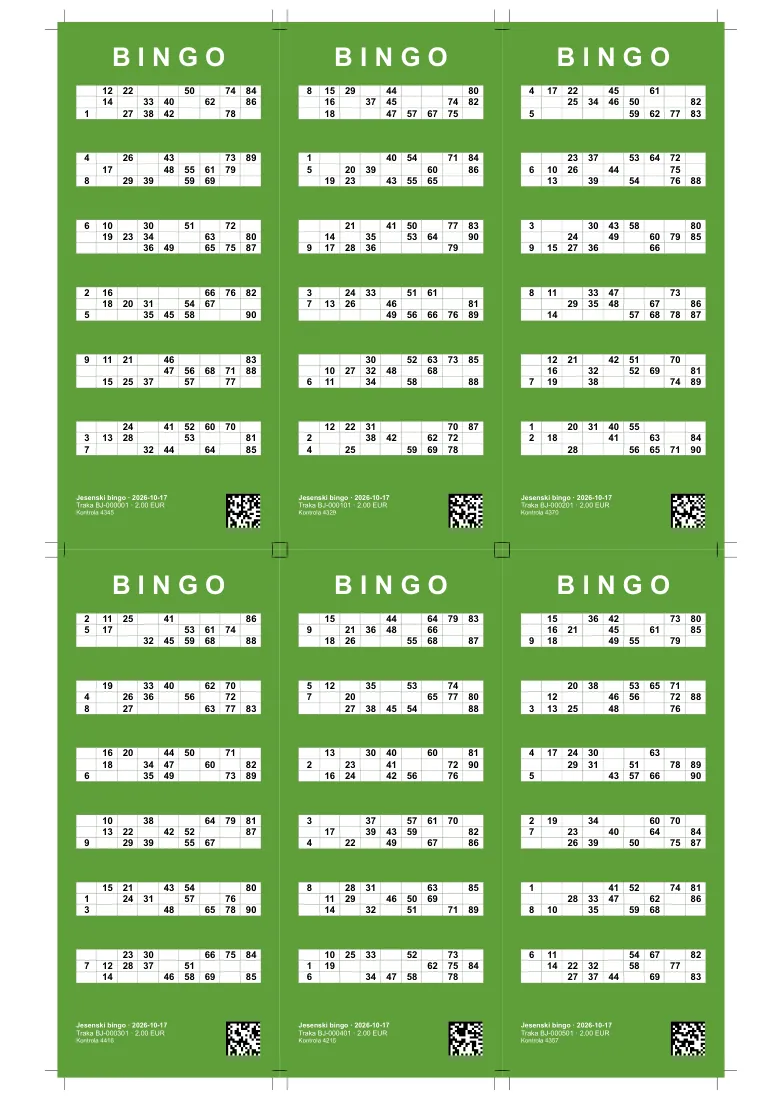
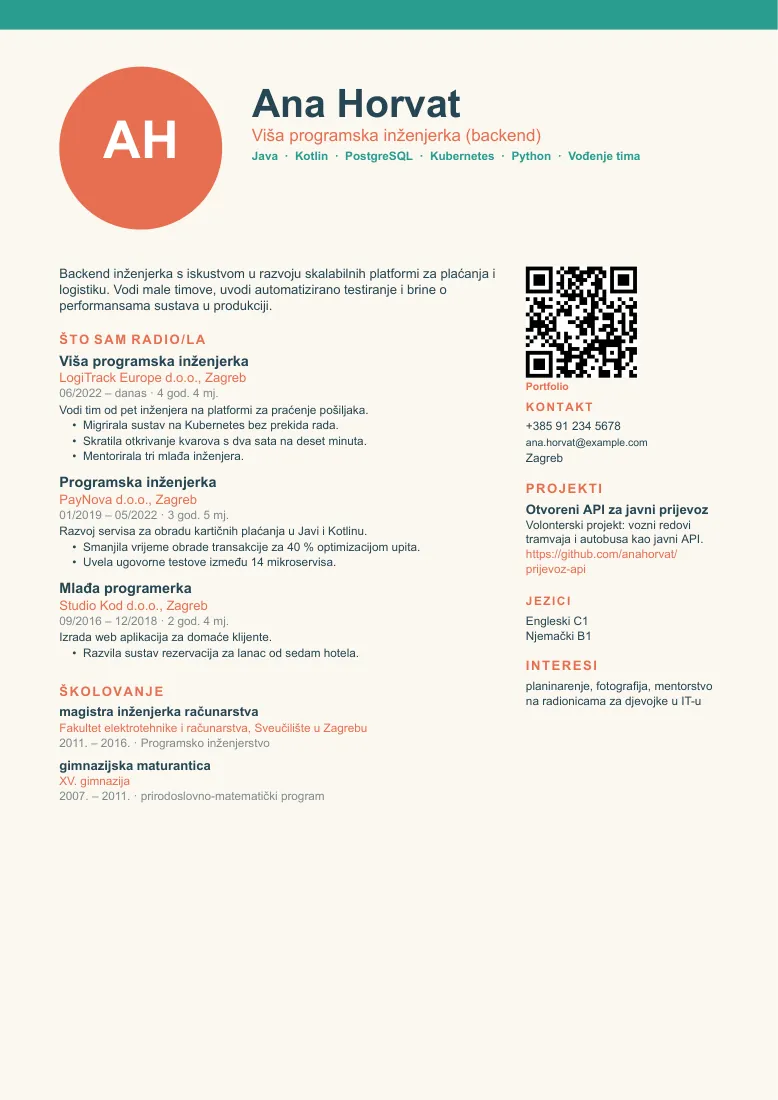
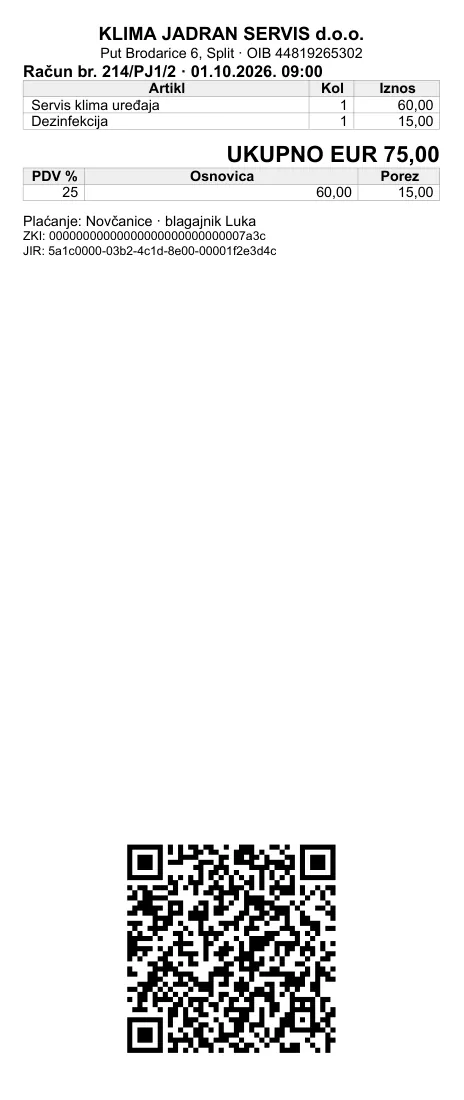

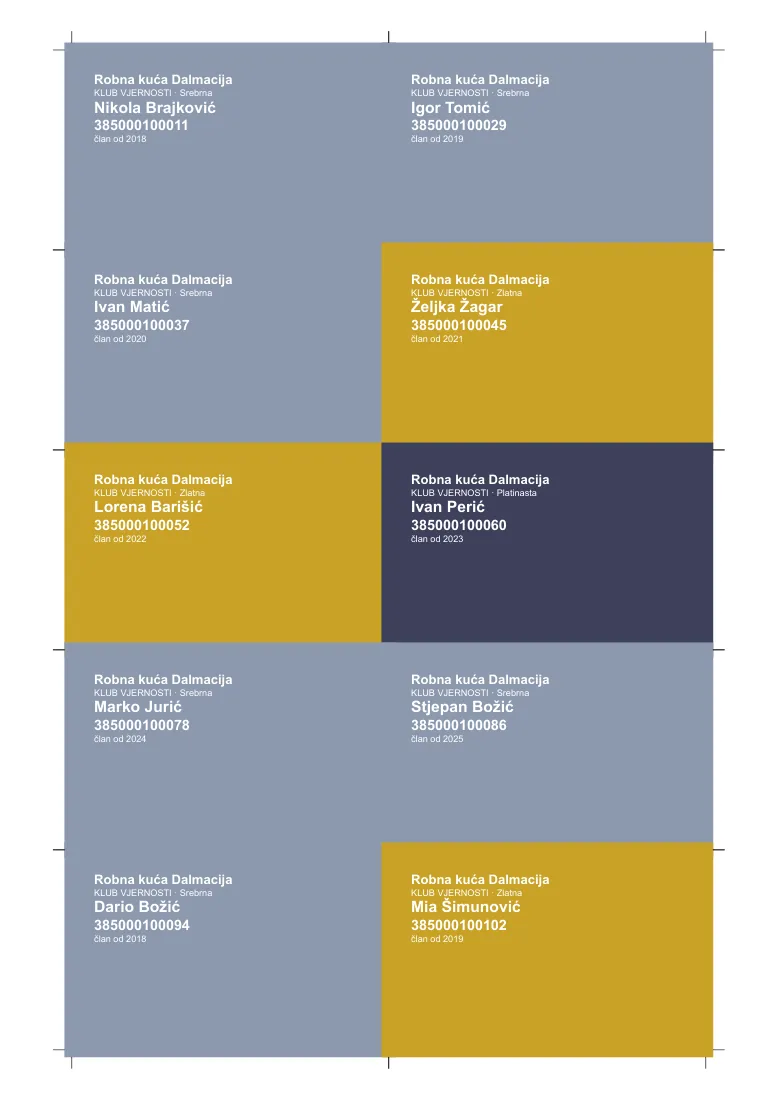

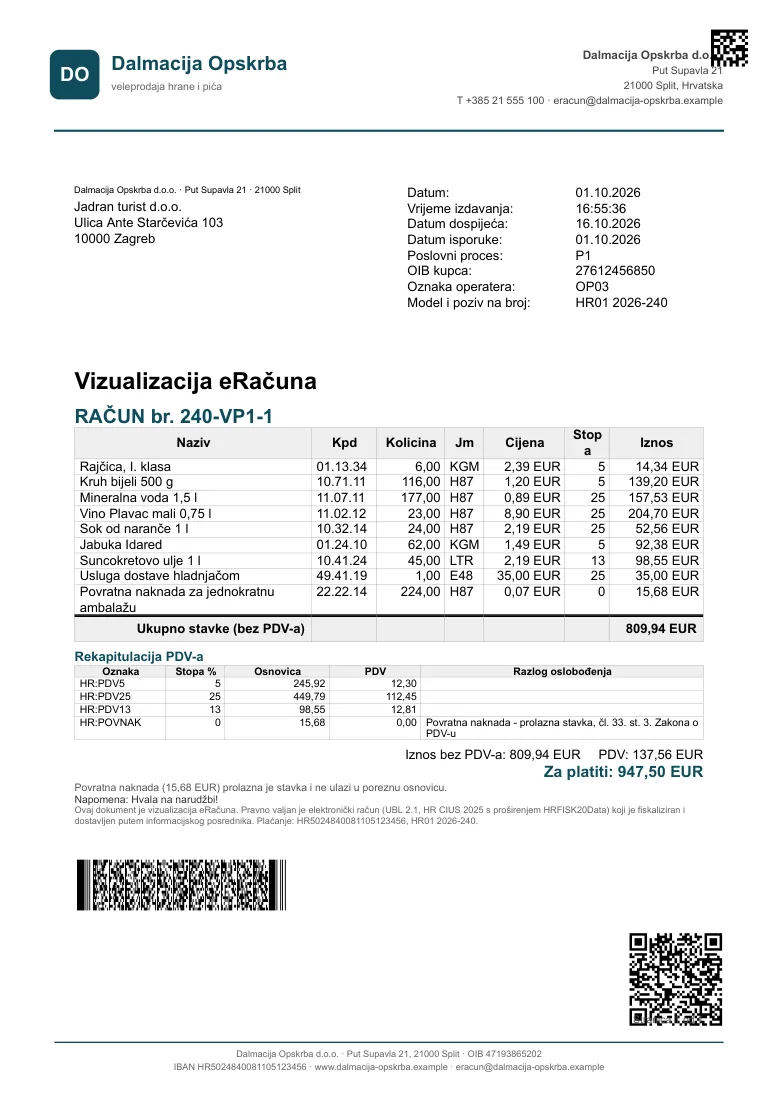
Whether the documents start in your data or arrive as PDFs from somewhere else.
Imposition, inserter marks, spool splitting, spot colours and PDF/X-4.
Statements, bills and policies in large runs. Printed, e-mailed and archived at once.
Incoming invoices, scans and spools read, split, cleared of personal data and routed on.
E-invoices in UBL 2.1, signed PDF copies and feeds for your DMS.
Searchable scans, PDF/A copies, metadata and bookmarks, delivered straight to your DMS.
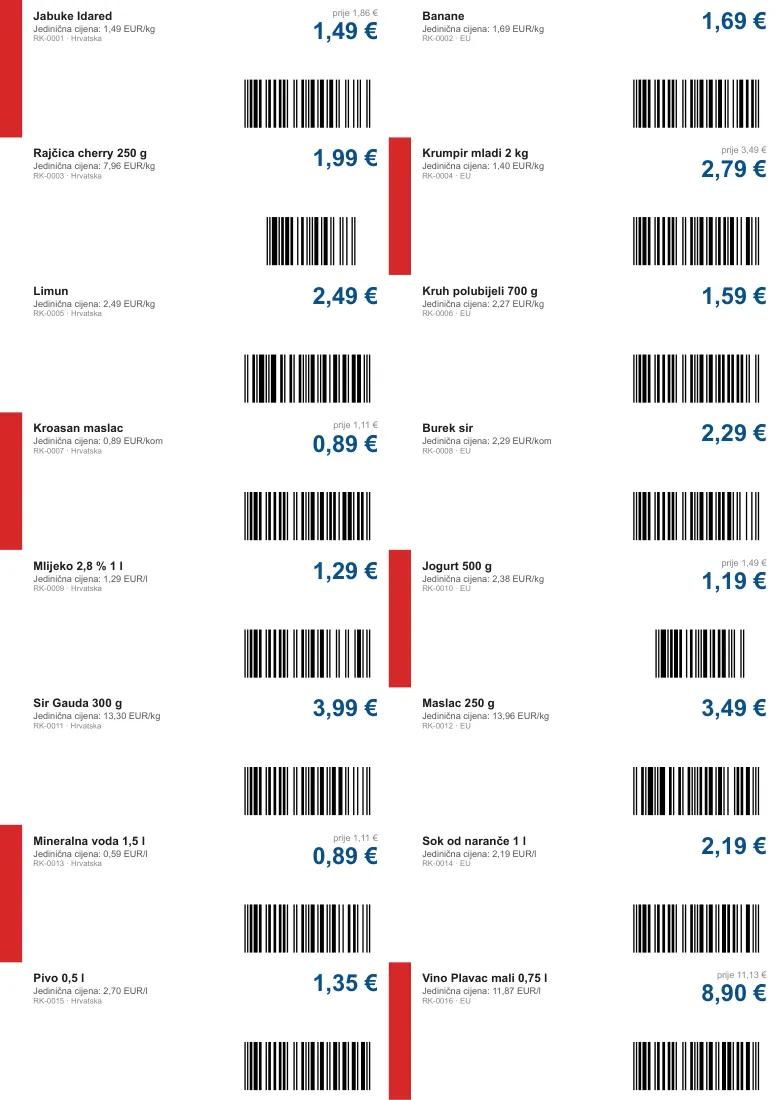
Price labels, vouchers, flyers, catalogues and personalised mailings.
You build a job in Designer. The other three parts take it from there.
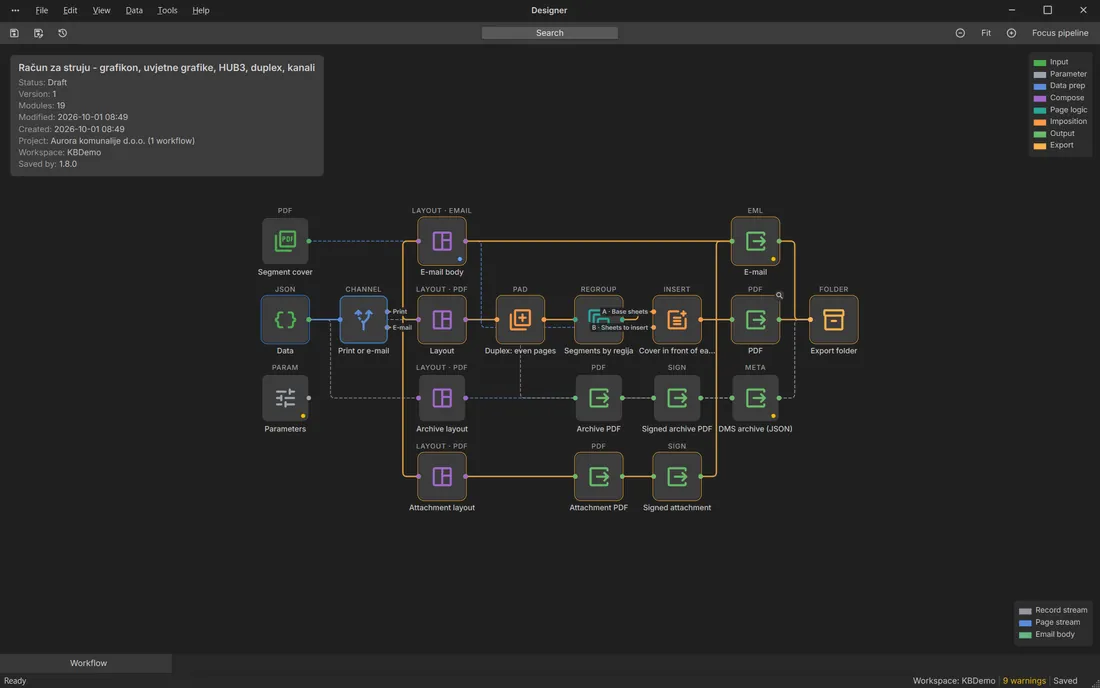
Data comes in at the top, finished documents leave at the bottom. Every box is a part of KBStudio and every line is a handover you can watch.
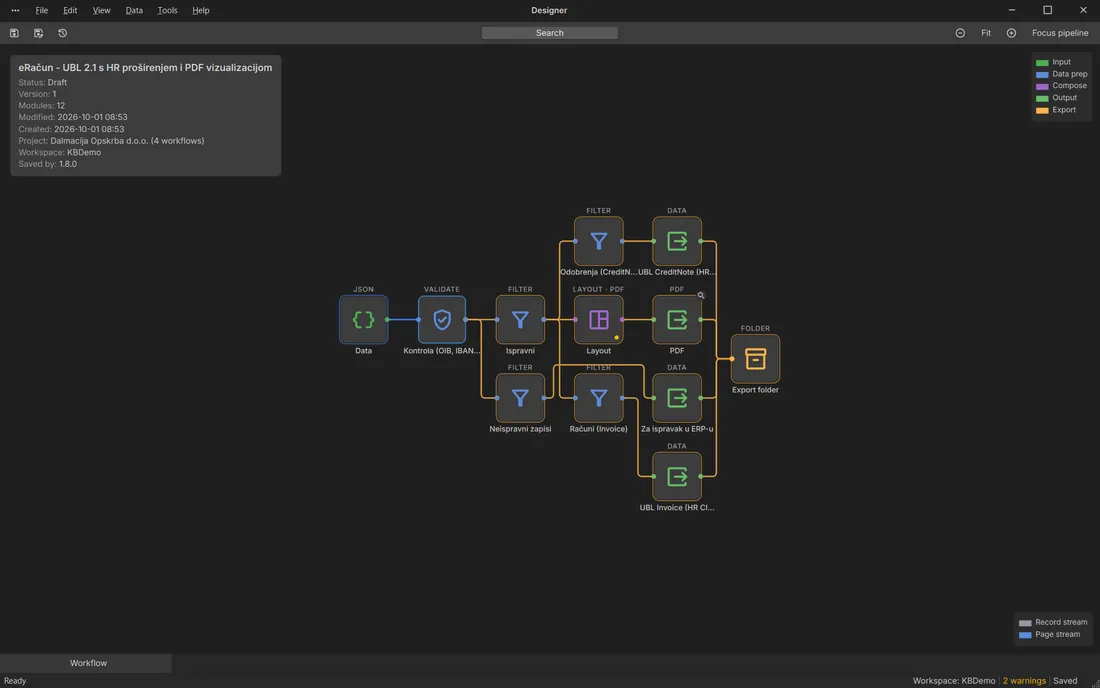
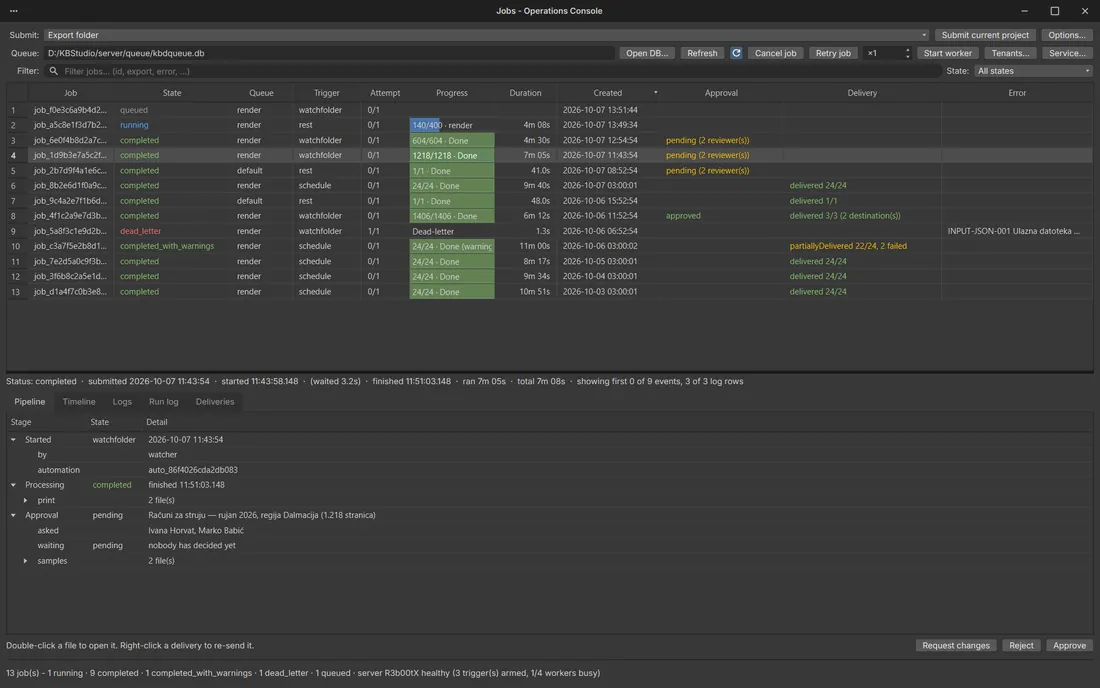
Where jobs get built. You connect data, prepare it, lay out the pages, check them in Page Proof and choose the outputs.
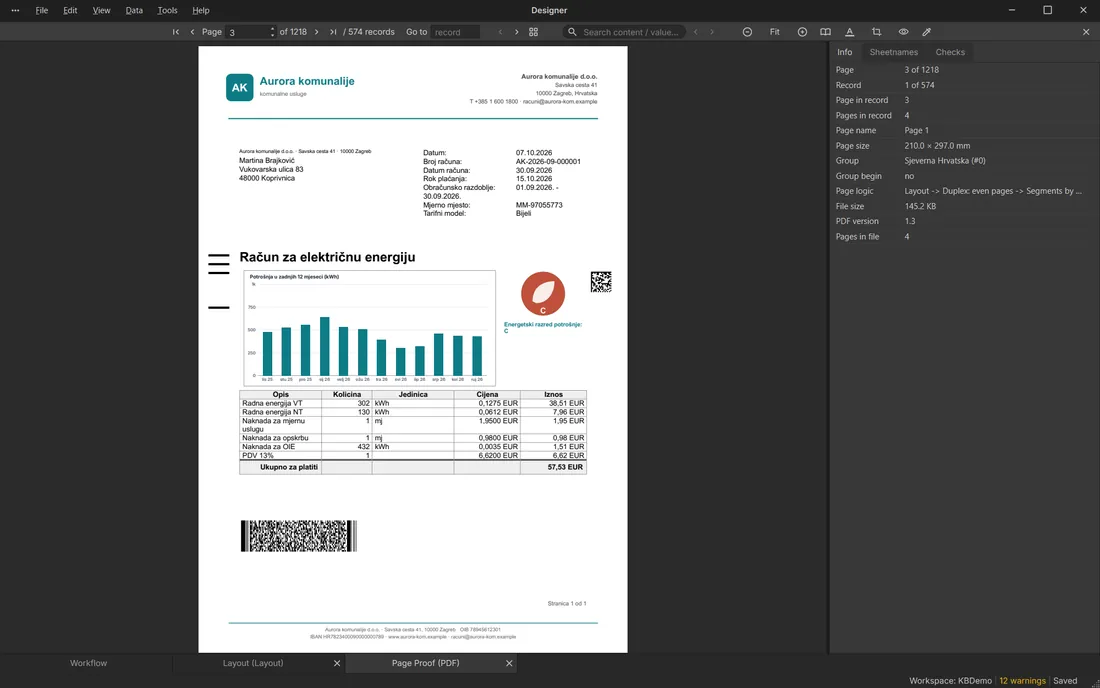
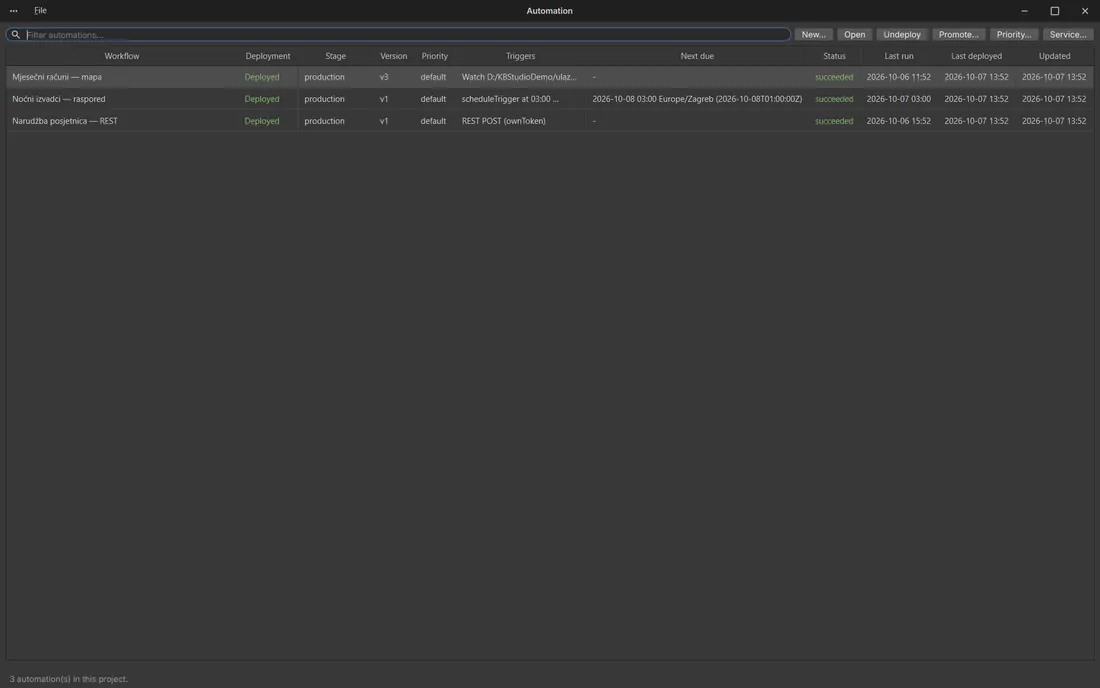
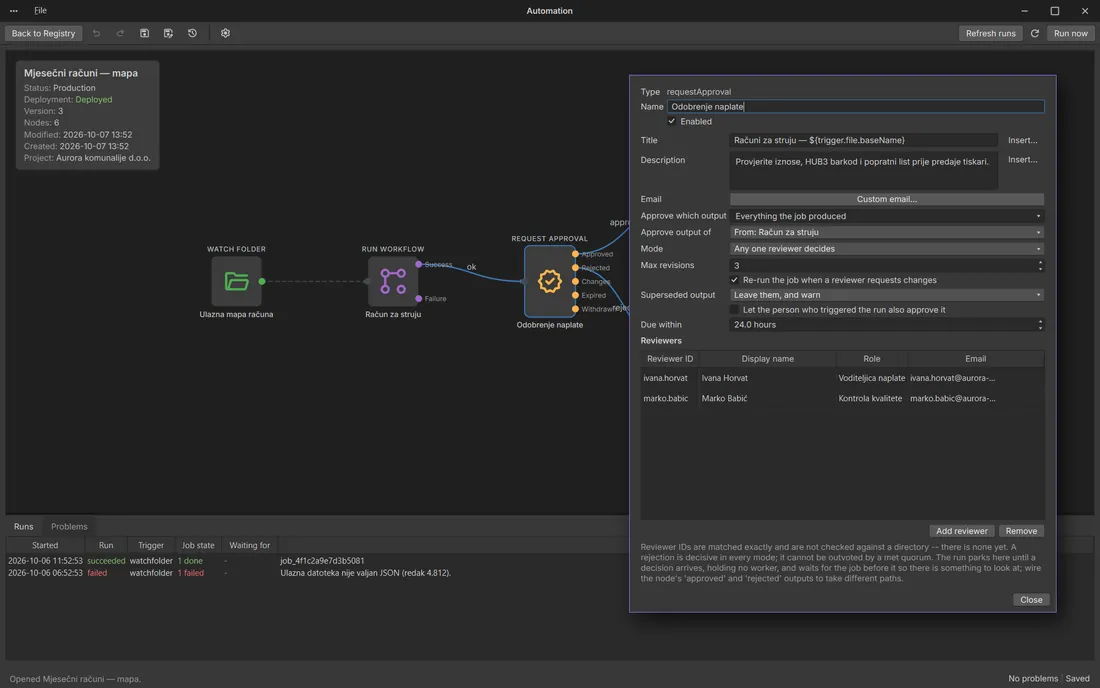
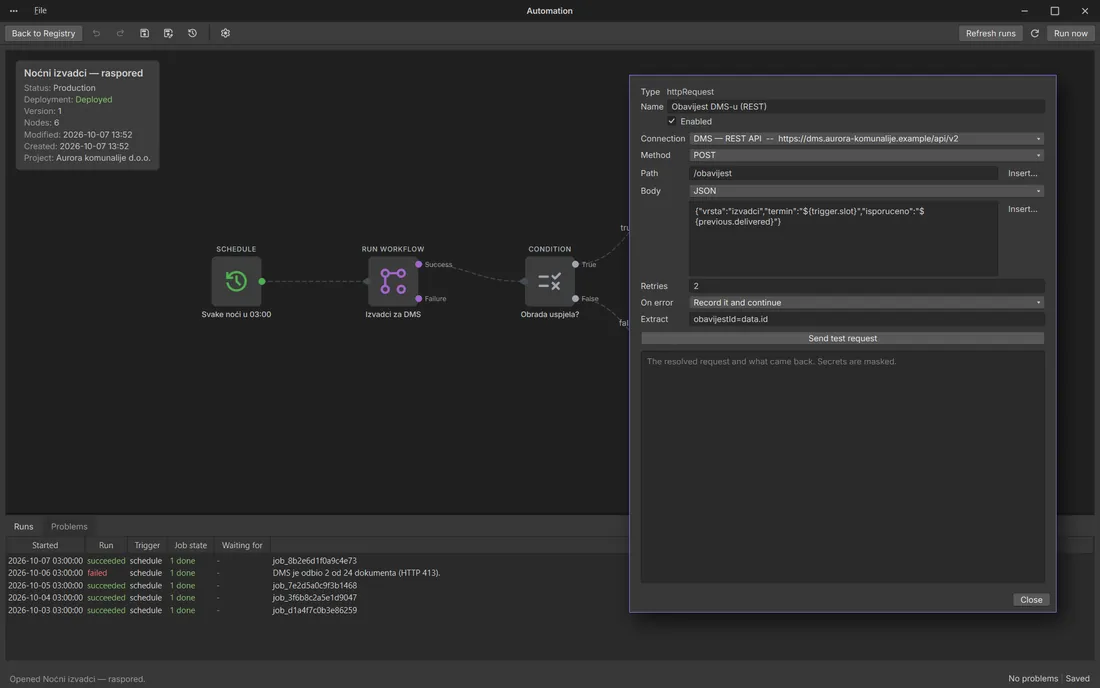
Runs a finished job without you. It can start on a schedule, when a file lands in a folder or on a REST call, and it runs as a Windows service.
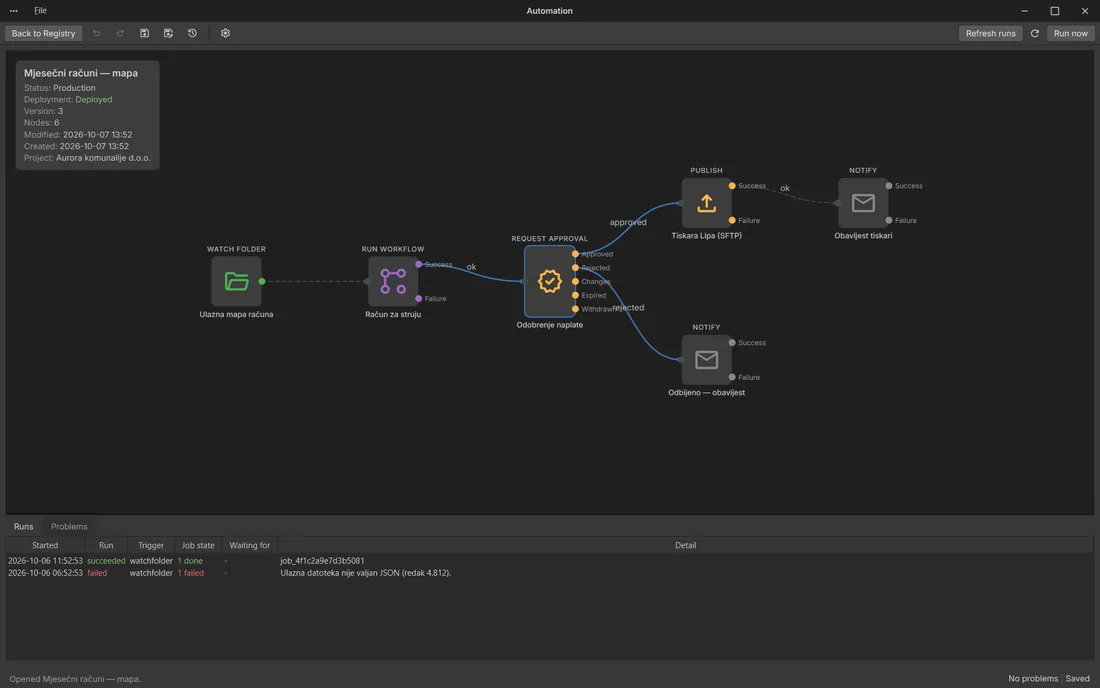
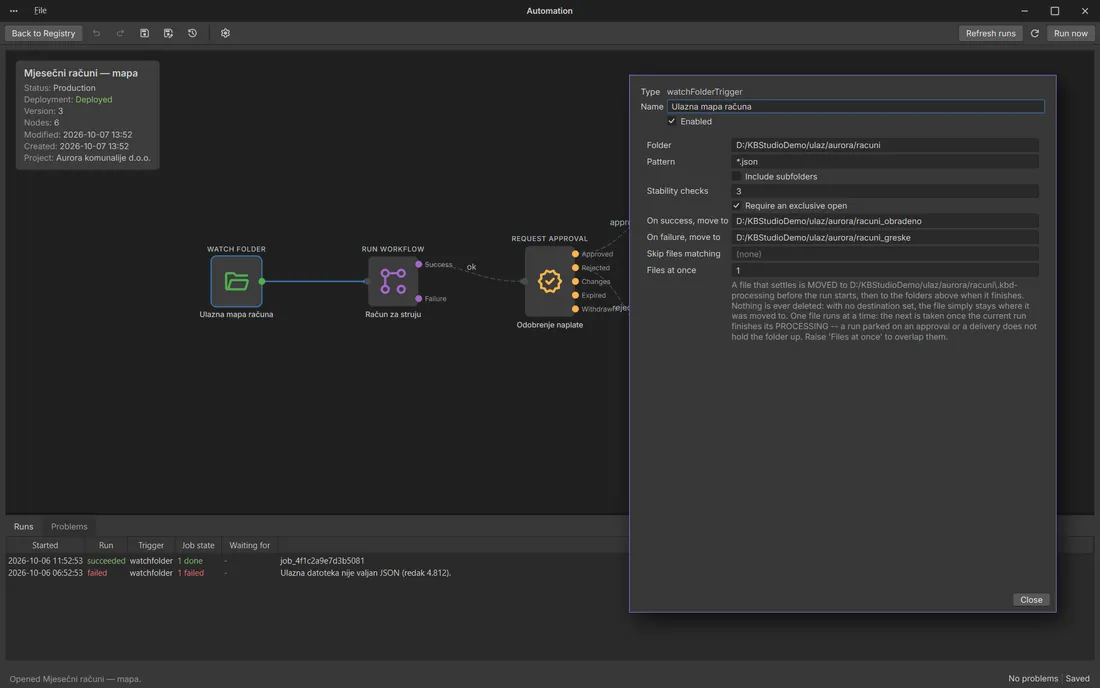
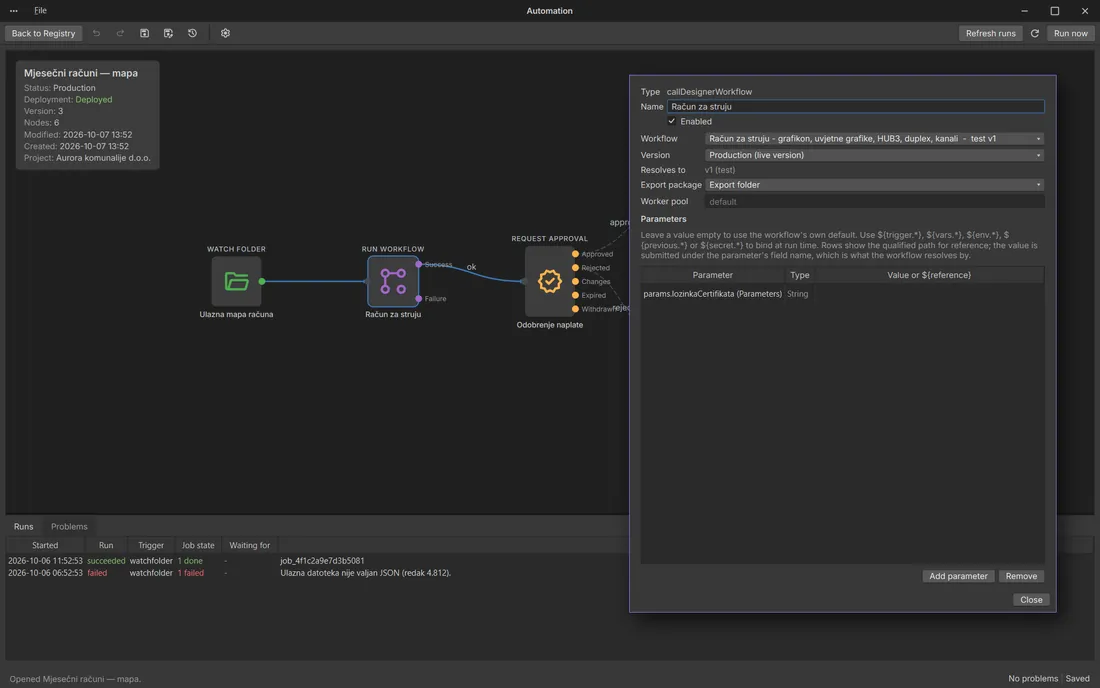
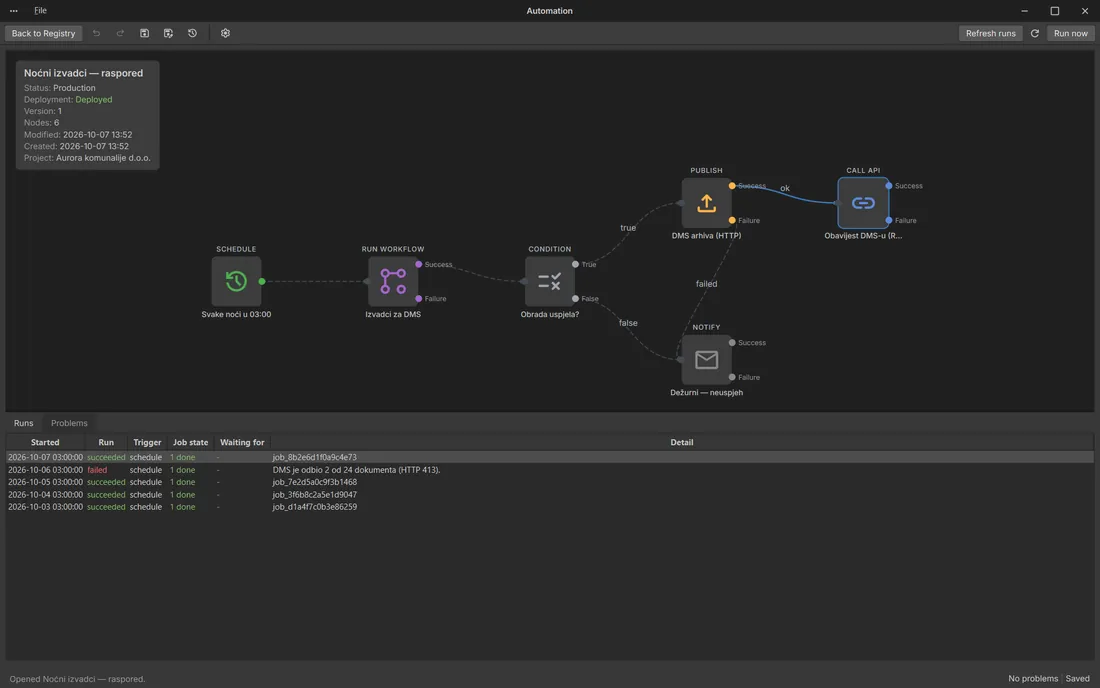
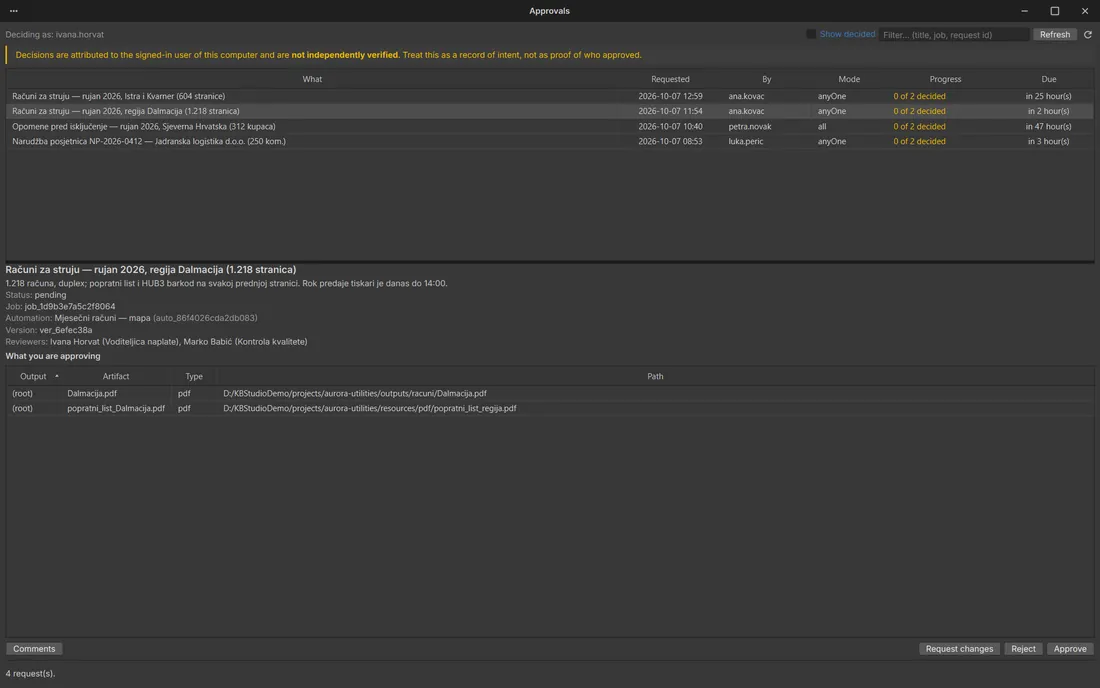
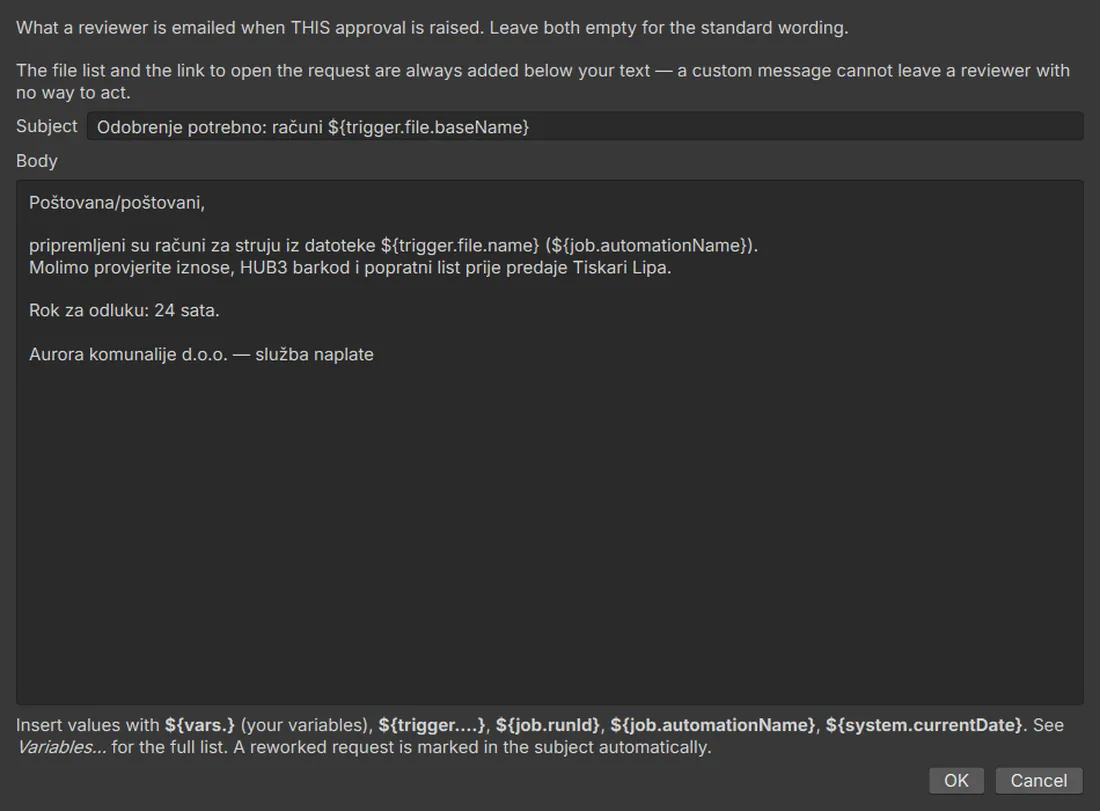
Holds the job until the right people say yes. They can approve in the app or straight from the link in an e-mail, or send it back for changes.
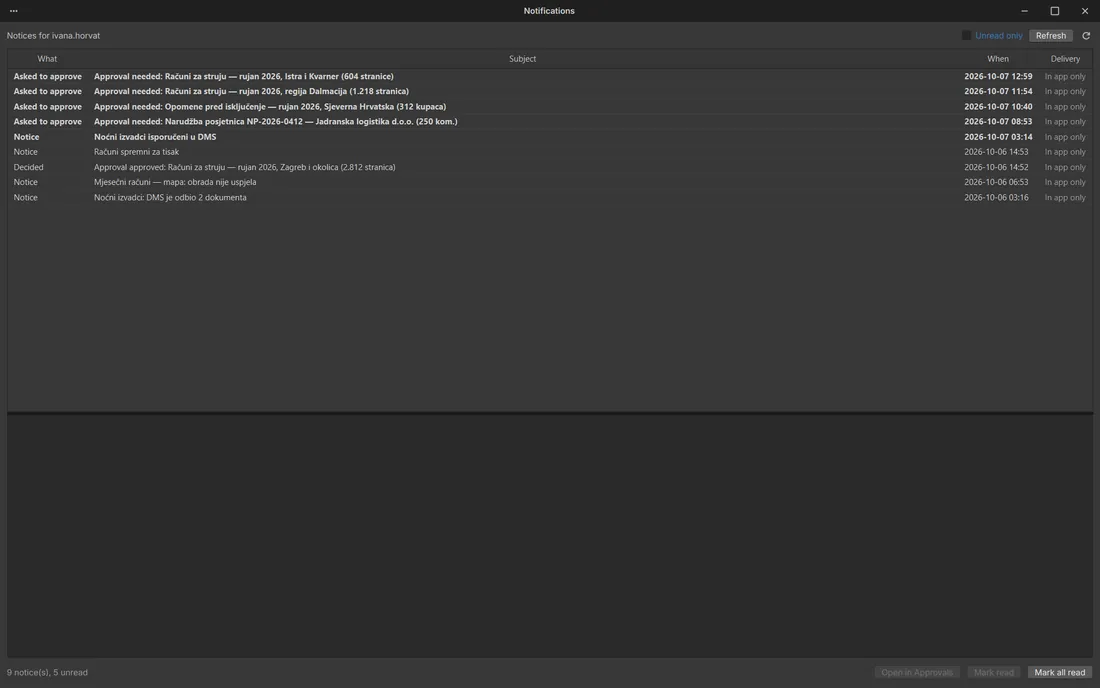
Delivers the files to a folder, an e-mail address, an HTTP endpoint or an SFTP server, retries when something fails and keeps a record of every delivery.
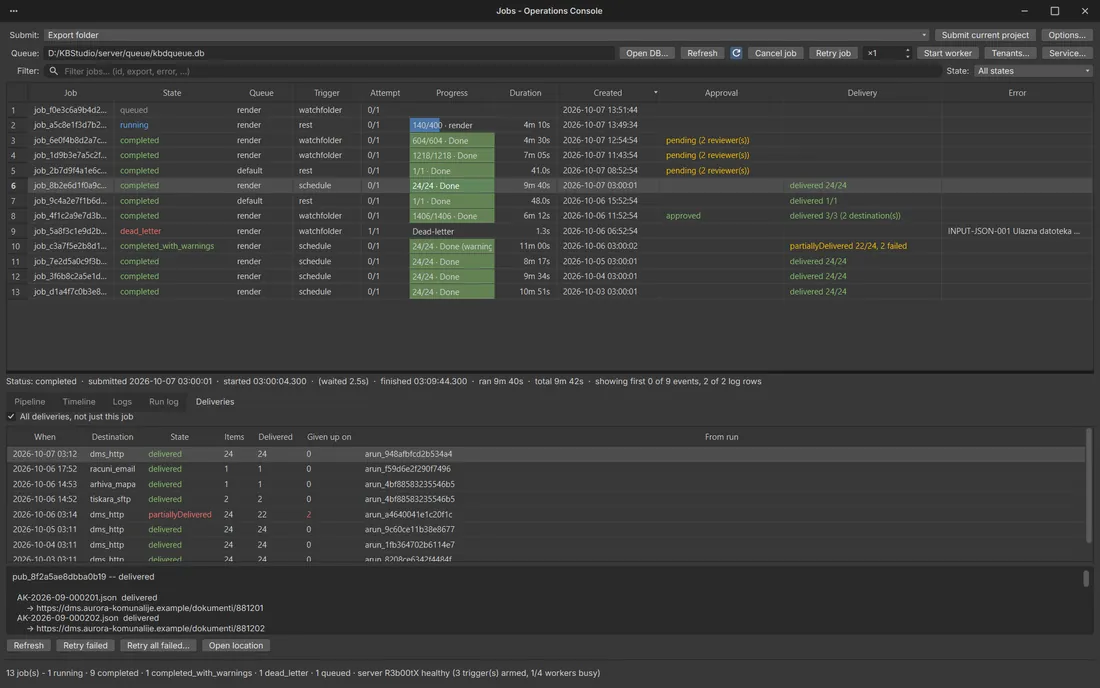
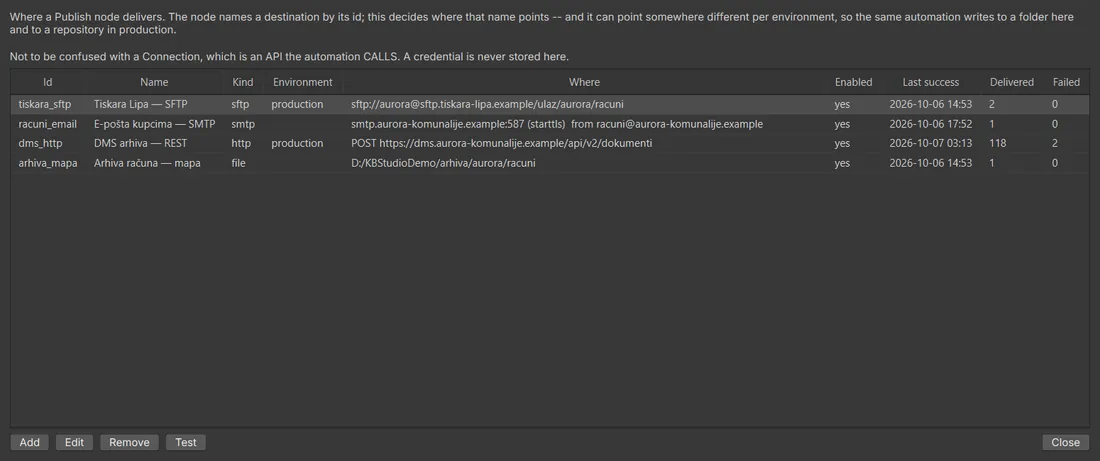
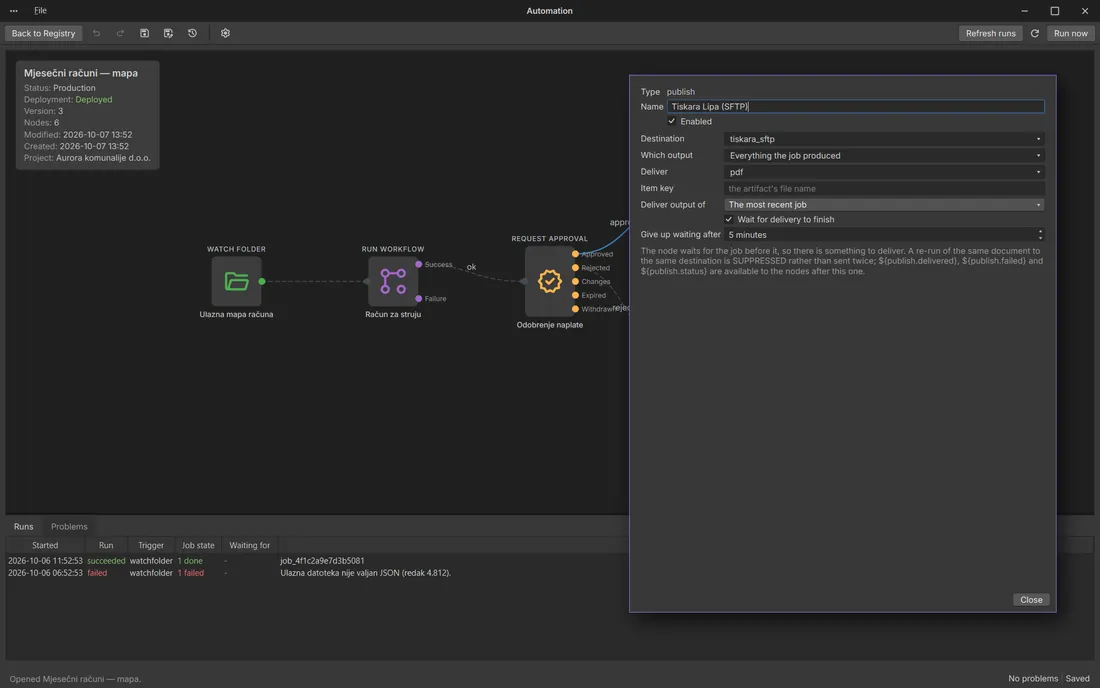

Each step below is a node on the workflow canvas. You can open any of them, test it on your sample data and see the result before you move on. Pick a step to see what it covers.
Bring in whatever you have
Get the records into shape
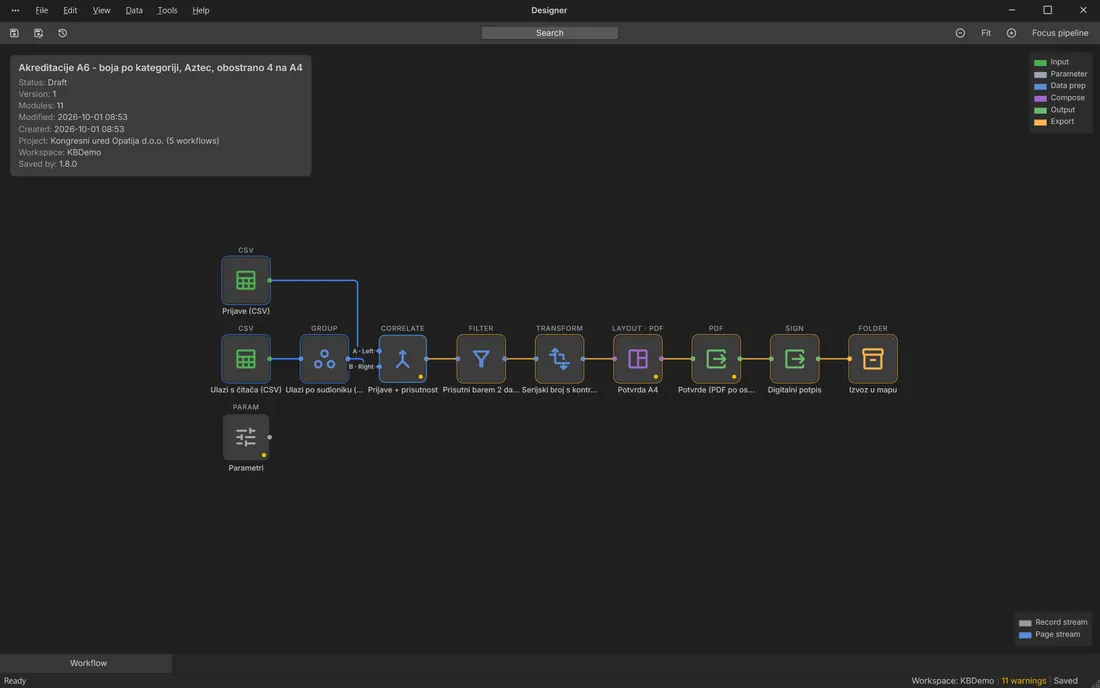
Pages that follow the data
Put the pages in order
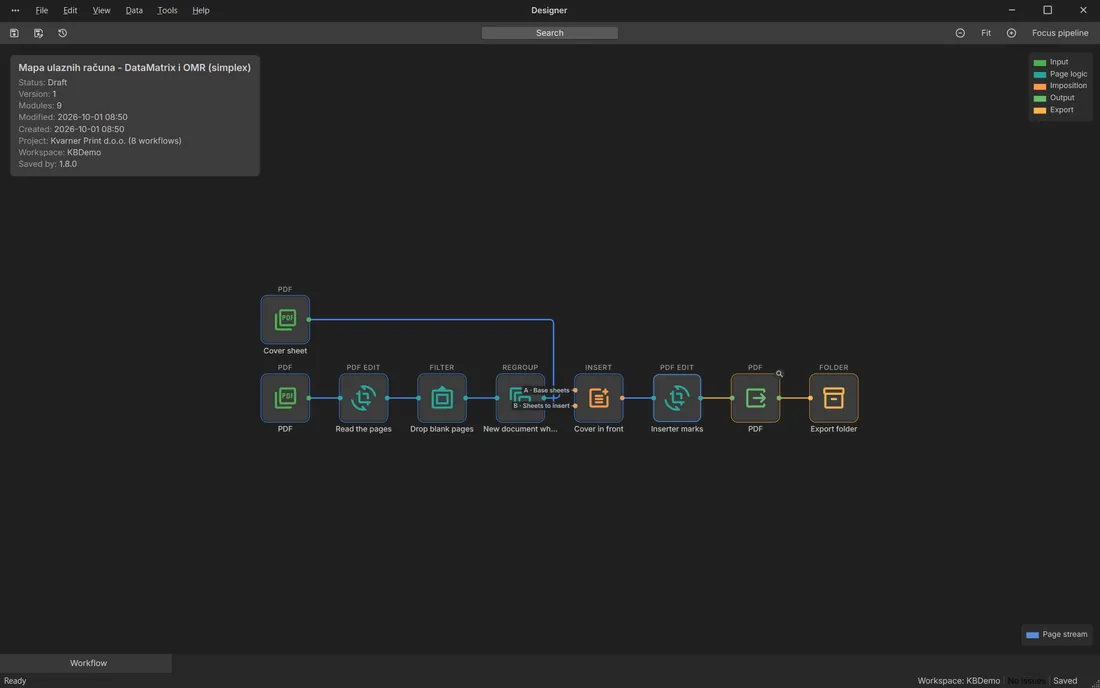
Ready for the press
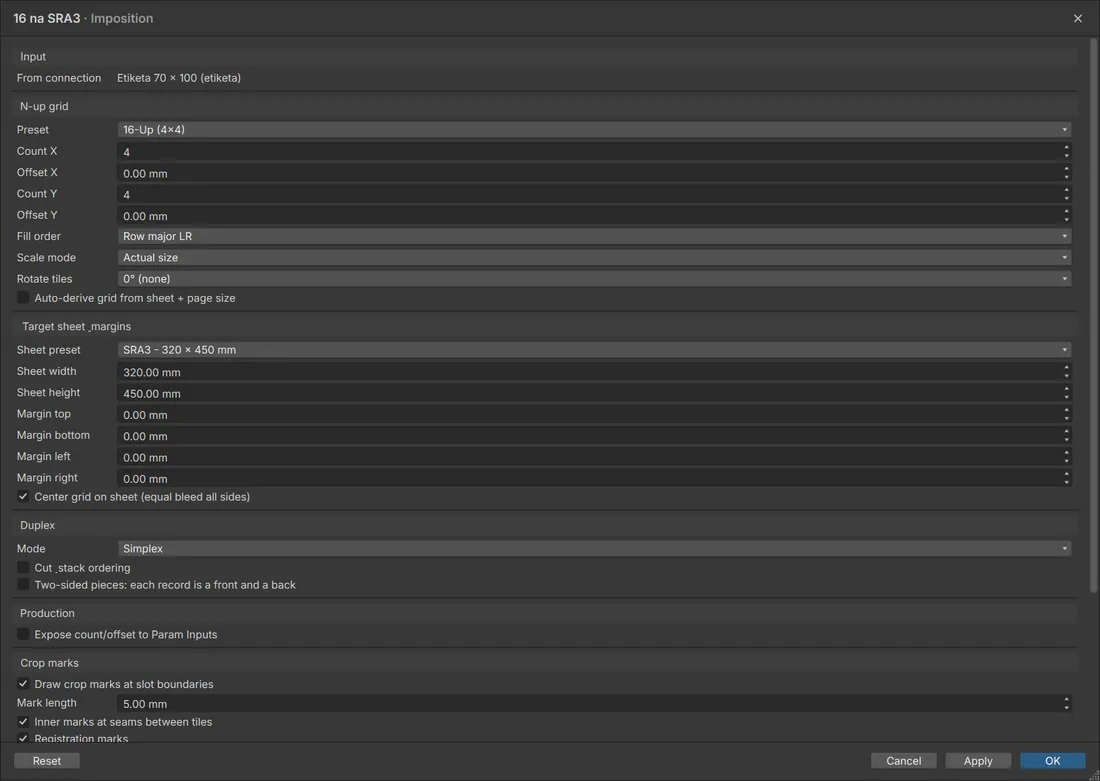
All formats from one job
See it before it goes out

Let it run
Someone signs off
Files go where they belong
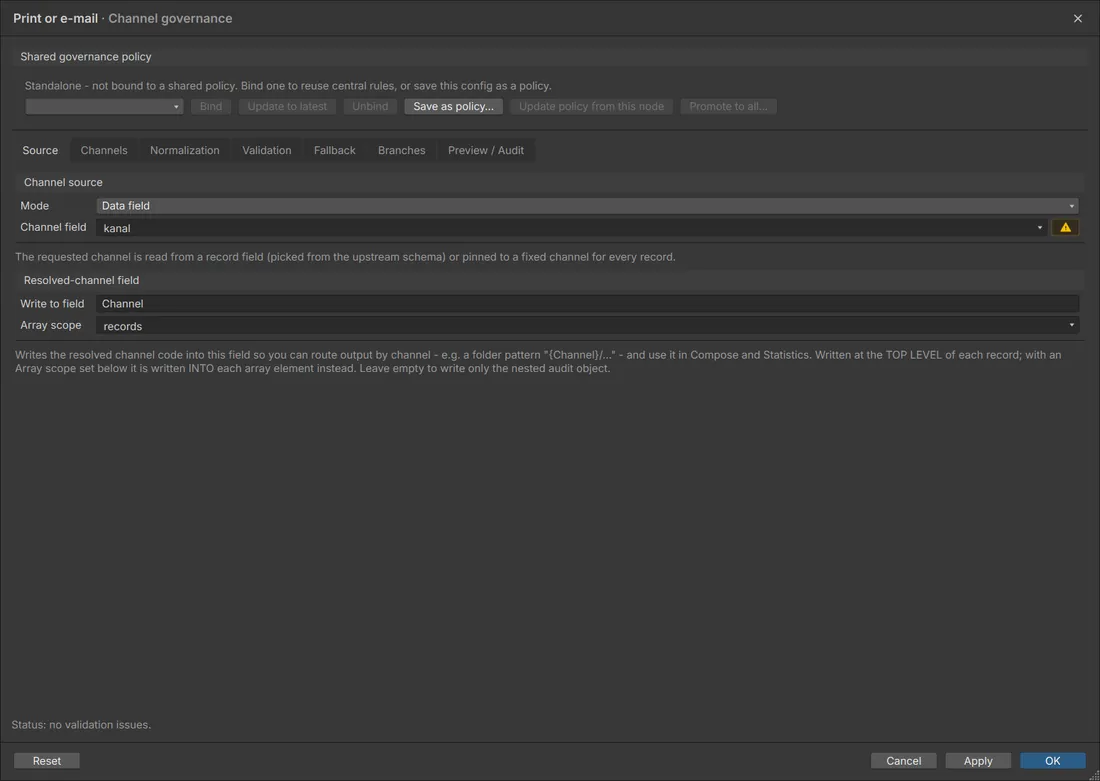
Know what happened
Describe the job in a prompt and an AI agent builds the workflow over MCP, test-runs it on your records and proves it before you even look.

Give it a data file and answer ten short questions. You get a complete workflow with address block, table, channels and output, and you can change all of it afterwards.
Imposition, booklets, gang-up on SRA3, crop and registration marks, colour bars, spot colours and PDF/X-4.
Print straight to a press or an older RIP. Import the PPD and the trays, media and device commands come into the job, with imposition, spot colours and transparency.
Schedules, watched folders and REST calls start the job. A Windows service runs it, approvals hold it and Publisher delivers it.
Page Proof, Data Proof, validation and a full run log, so you know what went out and why.
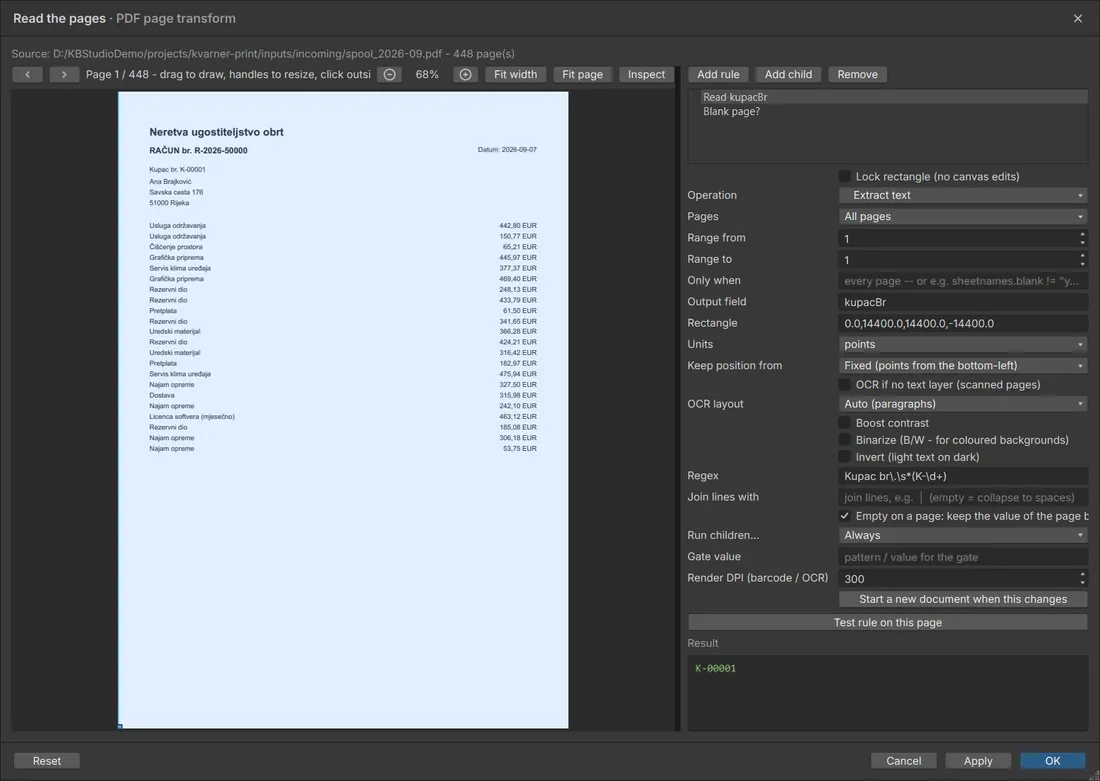
Read values off the page, split spools per customer, OCR, redact, stamp Bates numbers. It handles 20,000-page files without loading them whole.
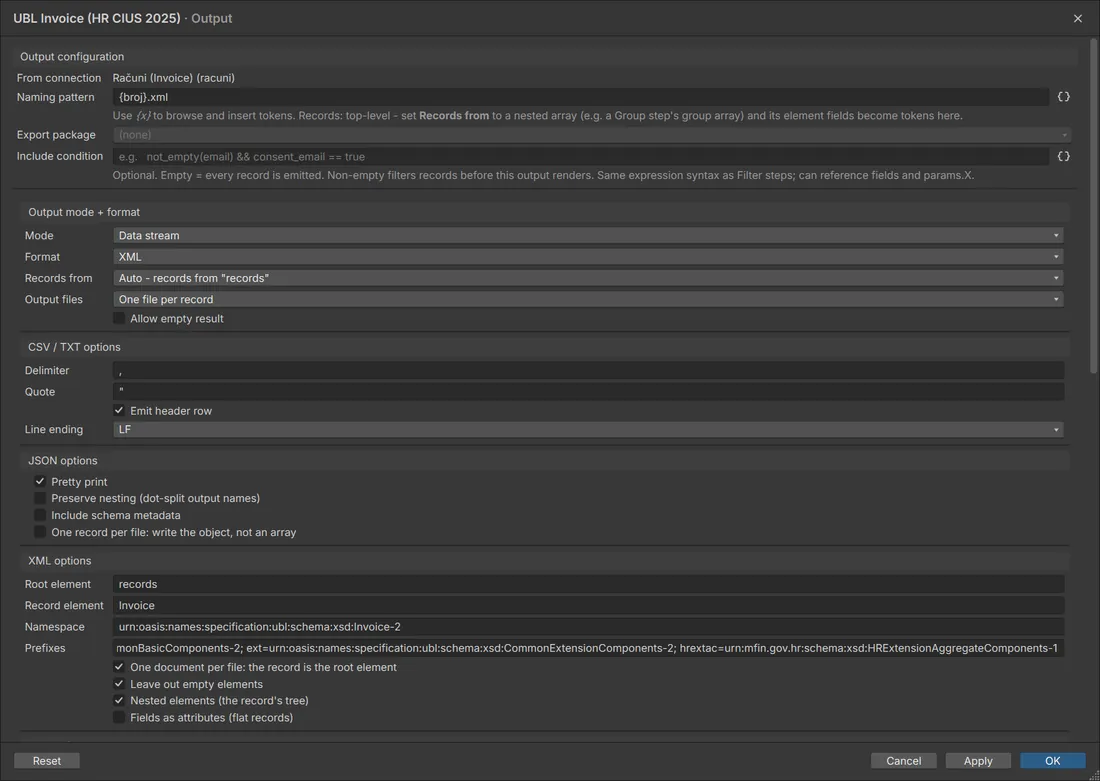
UBL 2.1 with the Croatian extension, Fiskalizacija 2.0 and FINA B2G, plus a readable PDF copy.
QR, HUB3, DataMatrix, Aztec, MaxiCode, GS1-128, EAN, UPC, ITF-14, Code 128 and more.
DataMatrix and OMR on every page or only on front sides, with sheet and set counters for the machine.
PAdES signatures with a visible signature box and a password per recipient, for example the employee's personal ID number.
Each recipient gets e-mail, paper or an archive copy, depending on consent and whether the address is valid.
Tagged PDF/UA with alt text, reading order and table headers. Checks for WCAG colour contrast, headings and language before export, and a conformance report after it.
Also in the box: tables across pages, table of contents and running heads, PDF forms, tagged PDF for accessibility, number and date formats, reusable components and styles, and project archives you can move to another computer.
KBStudio speaks the Model Context Protocol, so an AI agent in any MCP client can build workflows for you. It drafts them, runs them on your own sample records, looks at the pages that came out, decodes the barcodes and writes a checks file anyone can run again.
Build a monthly statement for 40,000 customers from statements.json. Letterhead as the page background, the address in a DL window, a transaction table that continues across pages with its header repeated, Page X of Y, and a DataMatrix on every page for the inserter.
Built for numbers. Dozens to hundreds of jobs in the time one used to take. We made 23 client projects with 96 workflows this way.
The agent drafts, you decide. It works only inside the workspace you name and only at the development stage. It cannot promote a workflow, deploy an automation, send e-mail or reach the production queue.
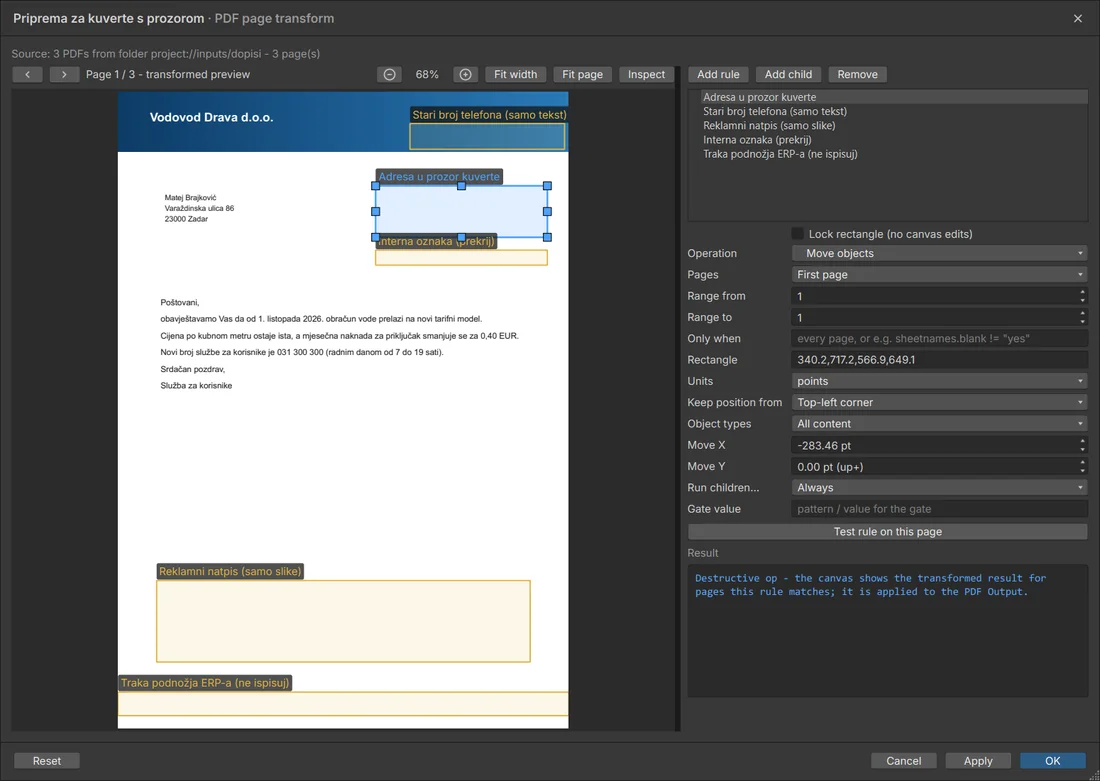
Print spools from another system, scans, incoming invoices, a folder of statements. KBStudio reads them, splits them, redacts and stamps them, and writes them out again. Imported pages stay native PDF objects; nothing is turned into an image.
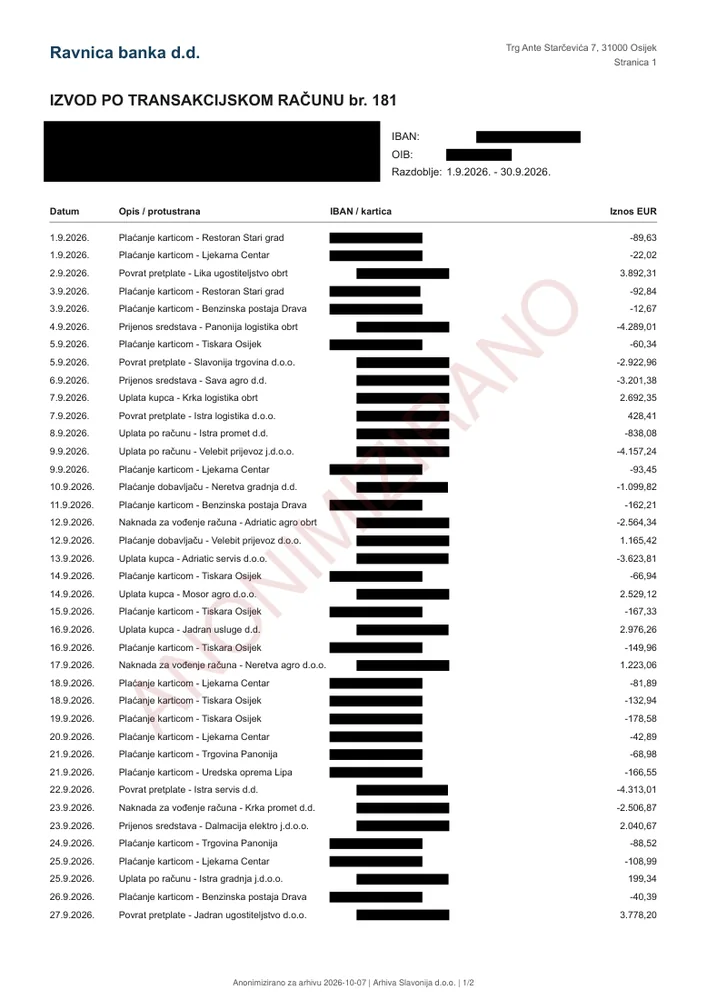
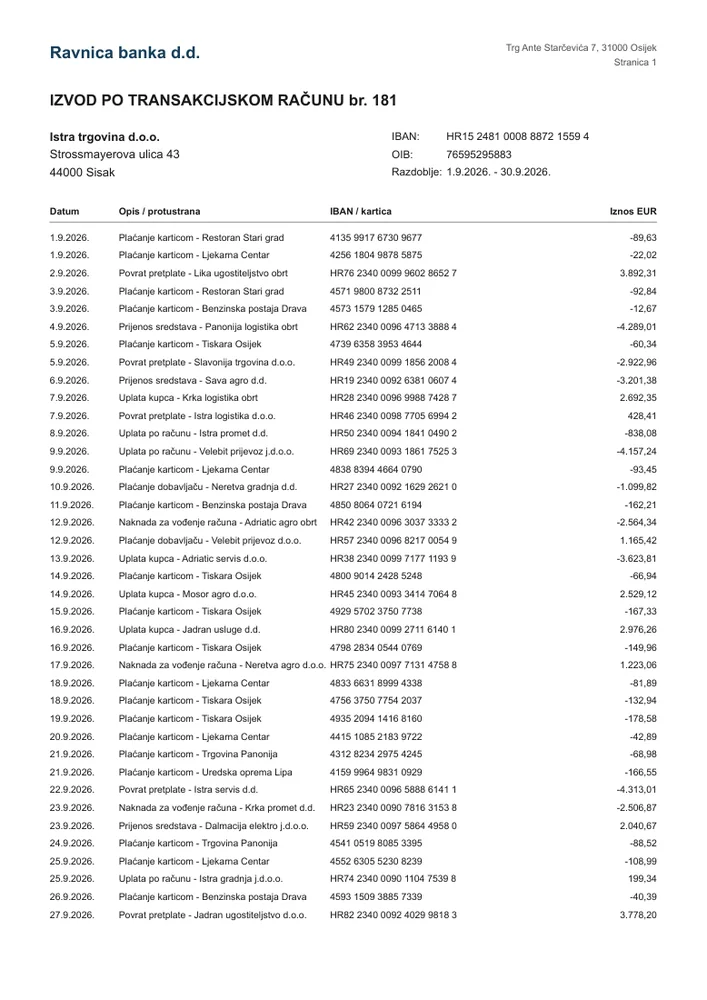
Each pair is the page that went in and the page KBStudio wrote. The company and the data are invented.
 BeforeAfter
A statement after anonymisation: the account holder block, IBANs, card numbers and OIBs are removed from the file, not just covered.


Then sign them (PAdES), protect them with a password per recipient and deliver them like any other output.
A document job in production needs more than a nice layout. It needs a place to live, a history, separation between customers and a way to talk to your other systems.
Work is organised into workspaces and projects. A project holds its workflows, layouts, data samples, fonts and pictures, and you can pack it into an archive and open it on another computer.
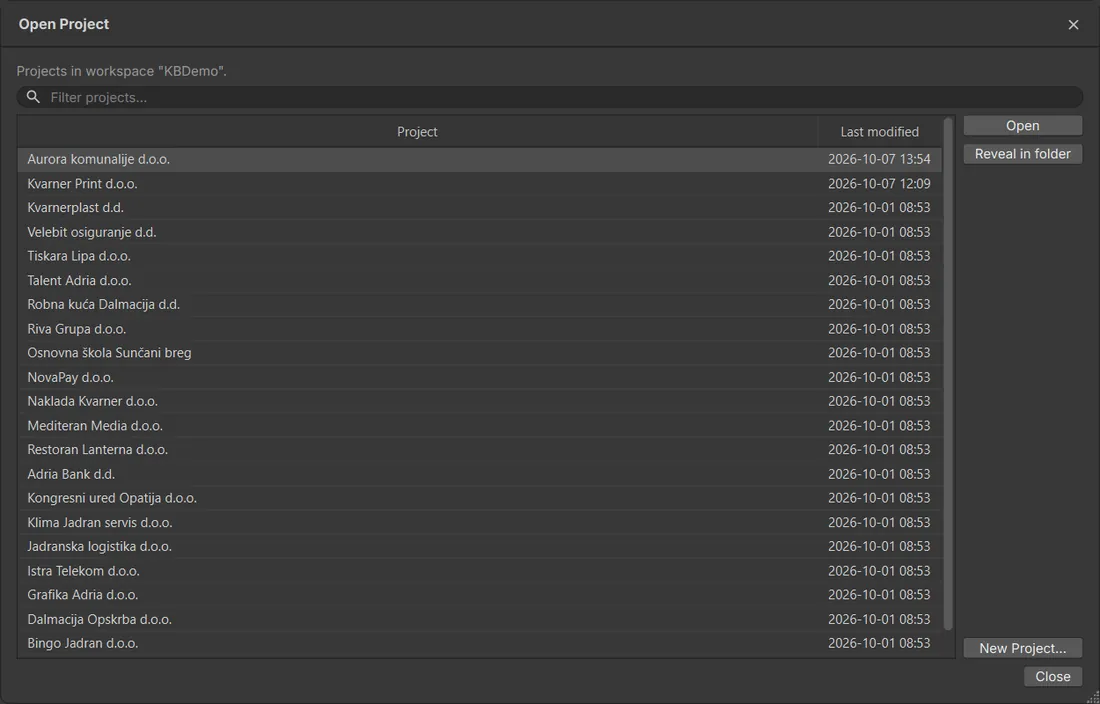
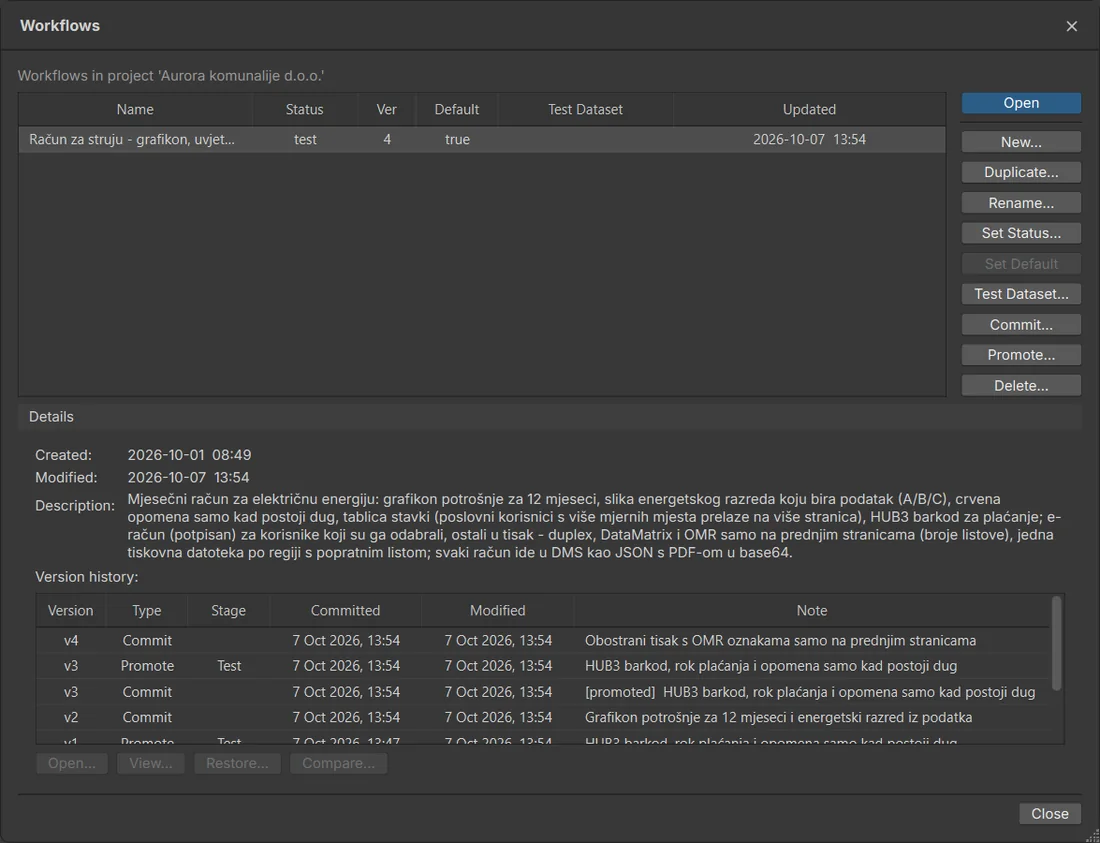
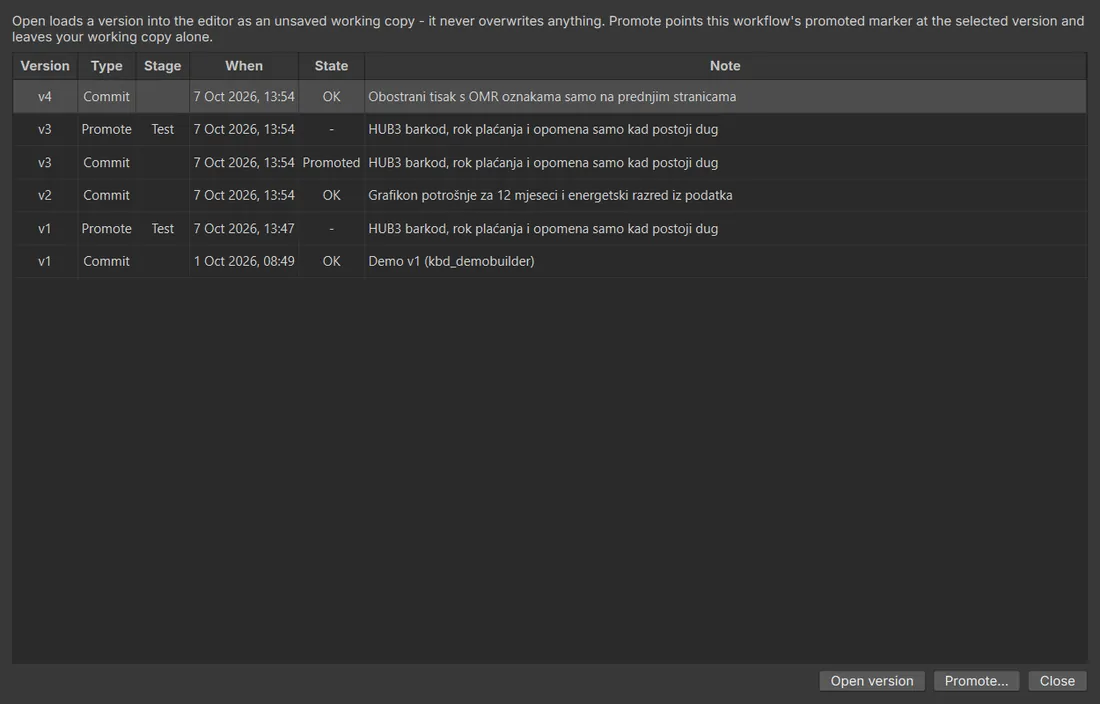
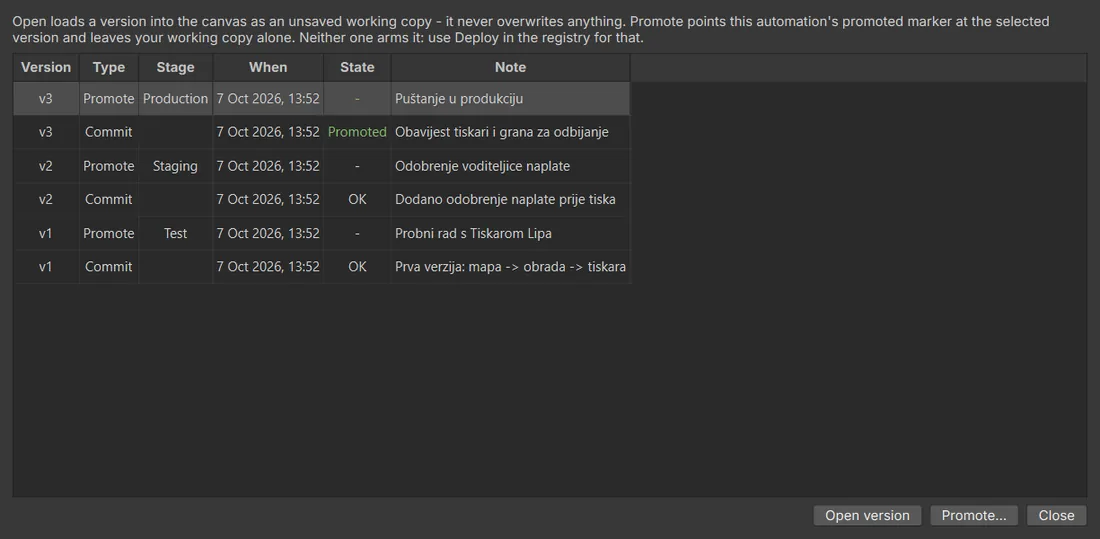
Every workflow and automation has a history. You commit a version with a note, compare and restore older ones, and promote a tested version to production when it is ready.
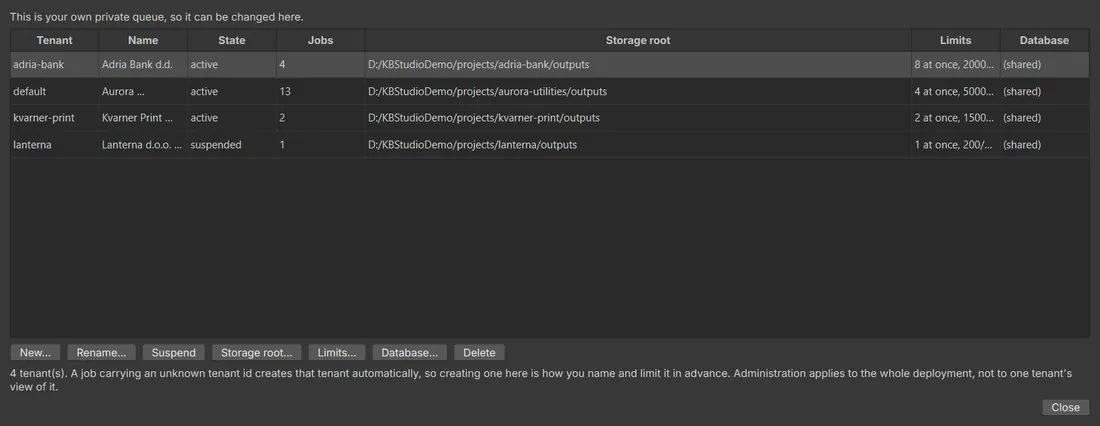
One installation can serve several customers or departments. Each tenant has its own users, queues, approvals and deliveries, and nobody sees another tenant's jobs.
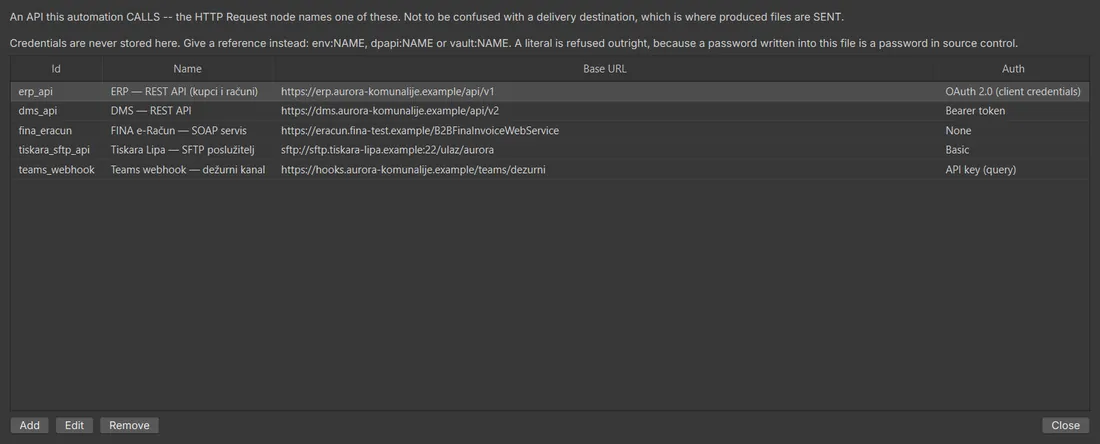
KBStudio reads from and writes to the systems you already run, so documents start from live data and end up where they are needed.
No more design tool plus scripts plus someone fixing the PDFs by hand at the end.
Job Builder and the starter projects get your first job running on day one.
Thousands of documents per run, the same result every time, and a log of what happened.
HUB3, Fiskalizacija 2.0, e-Račun in UBL 2.1 and local number and date formats work out of the box.
Book a demo, ask for a trial or try a guided pilot on one of your own jobs. Tell us a little about your documents and we will start from the example closest to them.
Kodabit Studio is based in the EU. If you use the form or write to us, we use your details only to reply. This site sets no cookies and loads nothing from other companies. We count visits in a simple way that stores no IP addresses. kodabit.info@gmail.com